
“Full sun” and “shade tolerant” are not interchangeable design labels. Light intensity, duration, time of day, reflected heat, airflow and cultivar genetics determine whether a plant merely survives or develops the density, color and health expected from it.
Light is the plant’s energy source
Plants use light to power photosynthesis. When a plant receives less usable light than it needs, growth may slow, internodes may stretch, foliage may thin and the plant may become less able to recover from pruning, pests or environmental stress.
That does not mean more sun is always better. Many species evolved beneath taller canopy and perform best in filtered light. The correct exposure is the one that matches the plant—and sometimes the specific cultivar.
- Morning sun generally provides useful light with lower afternoon heat.
- Filtered light can support shade-adapted plants while reducing scorch and water demand.
- Western exposure combines intense afternoon light with high leaf and soil temperatures.
- Reflected exposure beside pale walls, glass, paving or pool decks can be hotter than the sun-hours alone suggest.
Why light changes foliage color
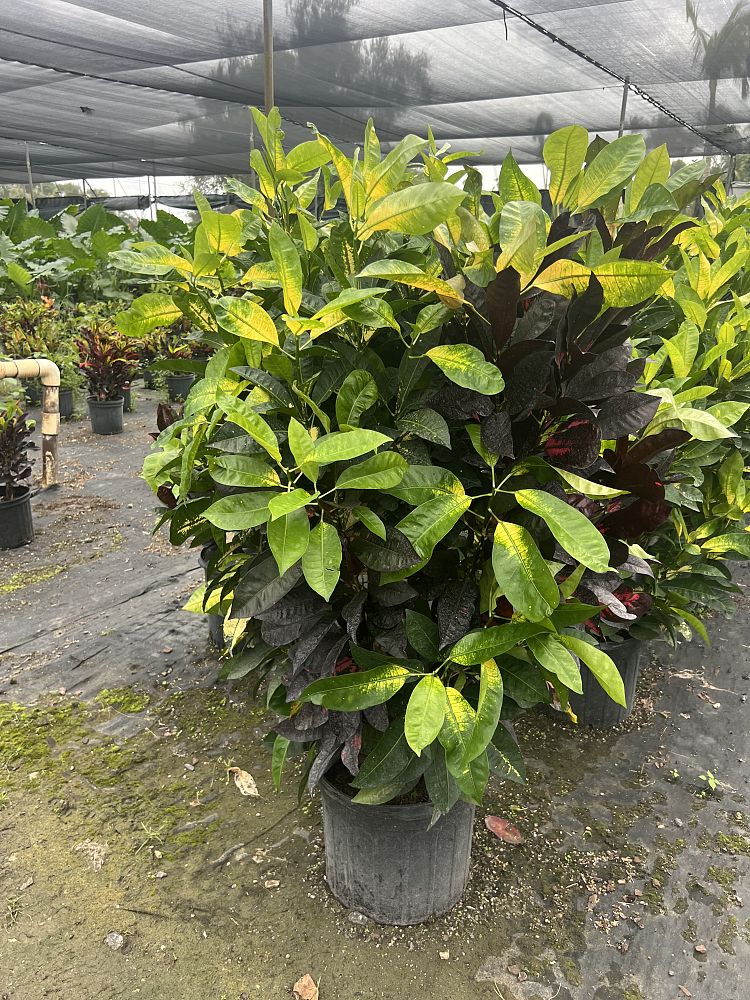
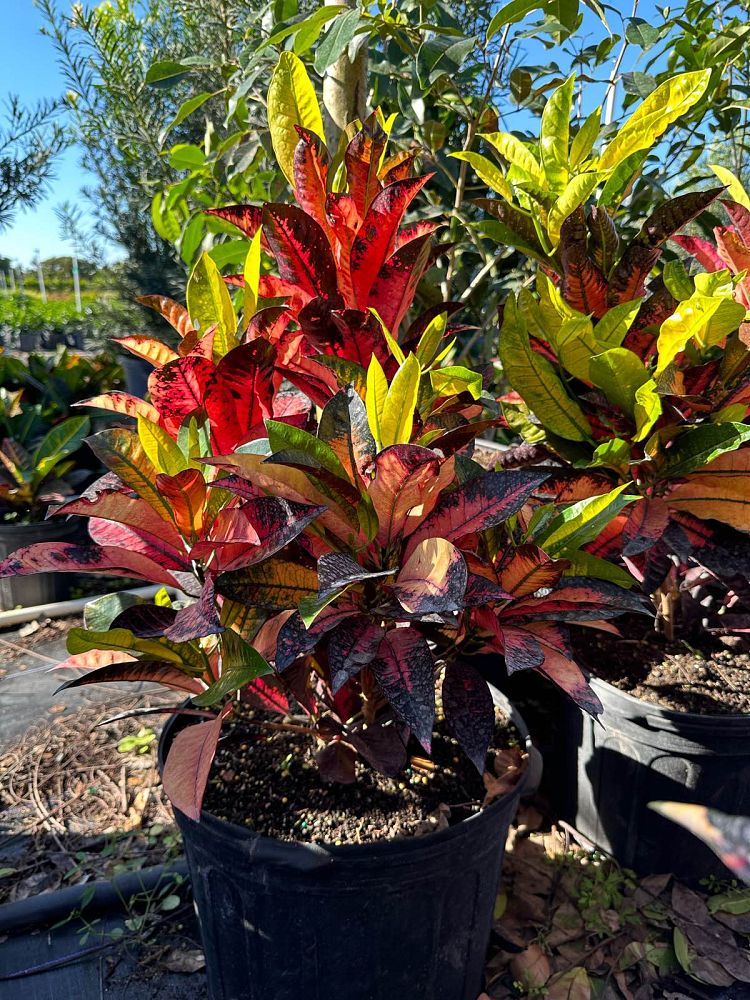
Variegated plants contain different proportions and patterns of chlorophyll and protective pigments. In Crotons, cultivar genetics determine the potential palette, while light intensity strongly influences how completely that palette develops.
The shade-grown ‘Mrs Iceton’ shown here is healthy but predominantly green. The sun-grown plant expresses much stronger yellow, orange, red and burgundy coloration and a more compact visual texture. Insufficient light can cause many Crotons to become greener or leggier, while excessive light can fade red and orange pigments or produce dull, scorched foliage.
This is an example—not a universal Croton rule. Some cultivars tolerate or prefer light shade, and newly installed shade-grown material must be acclimated gradually before receiving stronger direct sun.
Shade, moisture and fungal pressure
Shade does not directly cause fungus. Disease risk increases when shade combines with poor airflow, dense planting, overhead irrigation or drainage problems that keep foliage and soil wet for extended periods.
- Lower light and cooler surfaces can slow evaporation.
- Dense canopies can trap humidity and reduce air movement.
- Automatic irrigation may apply more water than a shaded root zone uses.
- Repeated evening irrigation can extend leaf wetness through the night.
- Chronically wet roots may reduce oxygen and mimic nutrient problems.
Correct the environment before reaching for a fungicide: adjust irrigation, improve drainage and airflow, avoid unnecessary leaf wetting and verify that the plant is suited to the exposure.
When direct light becomes excessive
Too much sun—especially after a sudden move from shade—can cause bleaching, marginal scorch, leaf drop and rapid moisture loss. The risk is highest with unacclimated nursery stock, tender new foliage, western exposures and reflected heat.
Acclimate plants gradually, water the root zone rather than repeatedly wetting foliage, and evaluate the complete microclimate instead of relying only on a plant tag.
Read the property before selecting the plant
- Document direct-sun hours in both summer and winter.
- Separate morning sun from intense afternoon exposure.
- Look for reflected heat from walls, windows, paving and pools.
- Compare moisture and drying time between sunny and shaded beds.
- Check airflow and irrigation coverage.
- Select the species and cultivar for the actual microclimate.
- Reassess as trees mature and surrounding shade changes.
The right plant in the wrong light may survive, but it may never deliver the form, flowers or foliage color that justified planting it.
Tomorrow’s feature
The versatility of Crotons
Our next Plant of the Week feature will compare multiple Croton cultivars, their foliage forms, mature size, preferred exposure and best landscape uses.
Explore the Plant Directory