
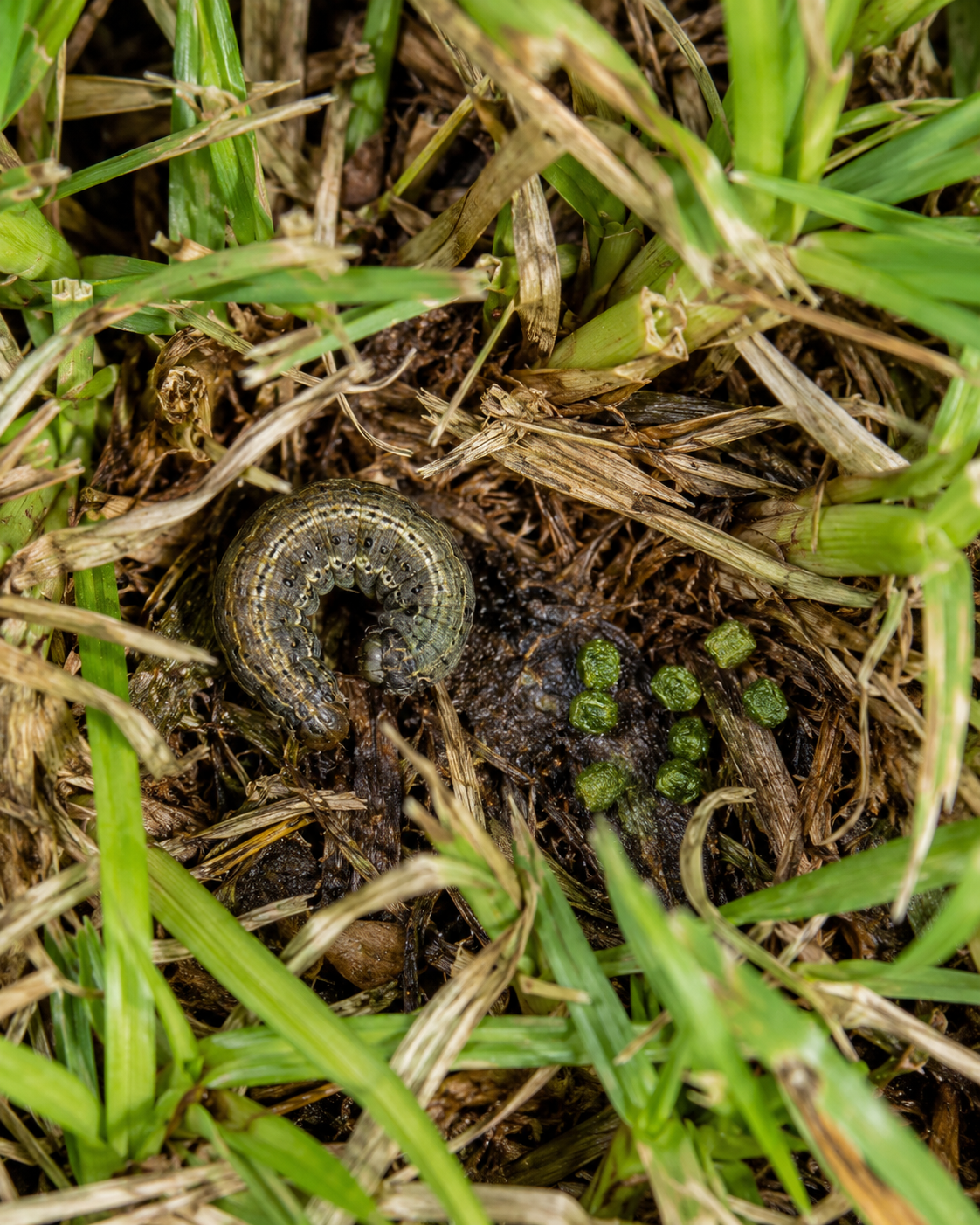
The small brown moths do not damage lawns. Their caterpillars feed primarily at night, first scraping translucent windows into grass blades and later leaving ragged edges, shortened blades and irregular thinning.
What homeowners can safely inspect
- Walk the lawn near dusk. Moths scattering from the turf suggest activity, but do not prove damaging larvae are present.
- Examine the boundary between healthy and thinning grass.
- Look for translucent window-like marks, chewed margins and blades that appear unevenly clipped.
- Part the turf and inspect near the soil for curled caterpillars or bright green pellet-like droppings.
- Check irrigation coverage and soil moisture because drought, saturation, disease, chinch bugs and mowing damage can look similar.
- Photograph the affected area and representative blades before applying anything.
Inspect before you treat
Do not automatically increase irrigation or apply a broad-spectrum insecticide. Extra water will not correct chewing damage, and an unnecessary pesticide application can affect beneficial insects without addressing the cause.
Responsible next steps
Product choice and timing should follow confirmed larvae or characteristic feeding injury and the current Florida label. Preserve beneficial predators, correct irrigation and mowing stress, and use the least disruptive labeled approach that fits the site and target.
When professional diagnosis is appropriate
Request a qualified inspection when damage expands quickly, the cause remains unclear, new sod is involved, multiple lawn problems appear together or treatment requires pesticide selection.