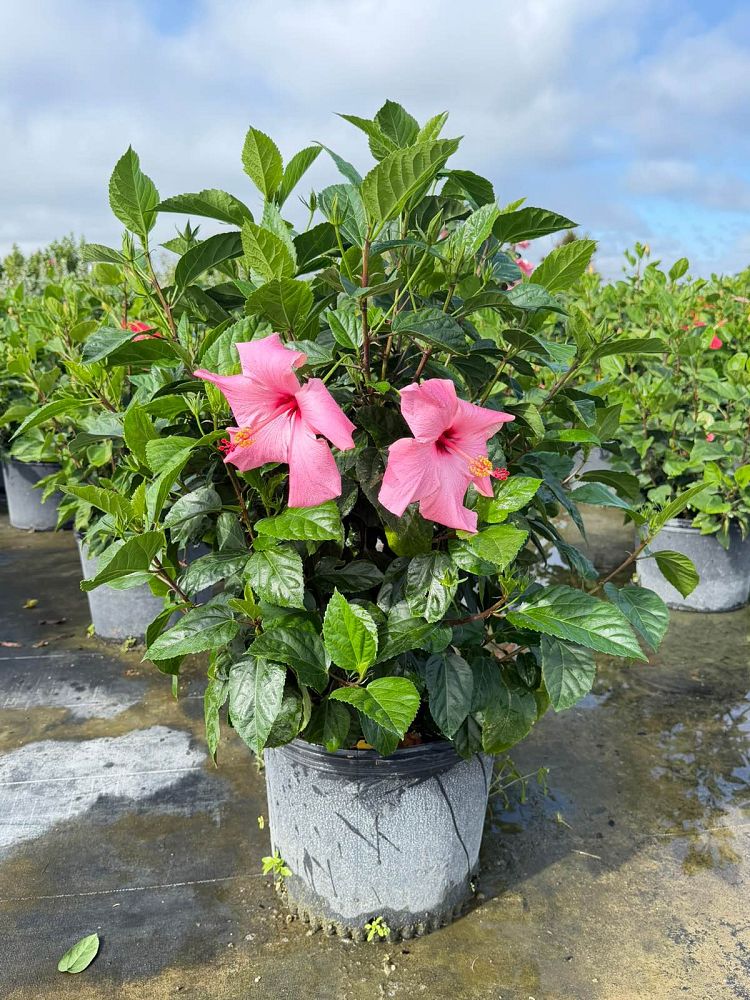
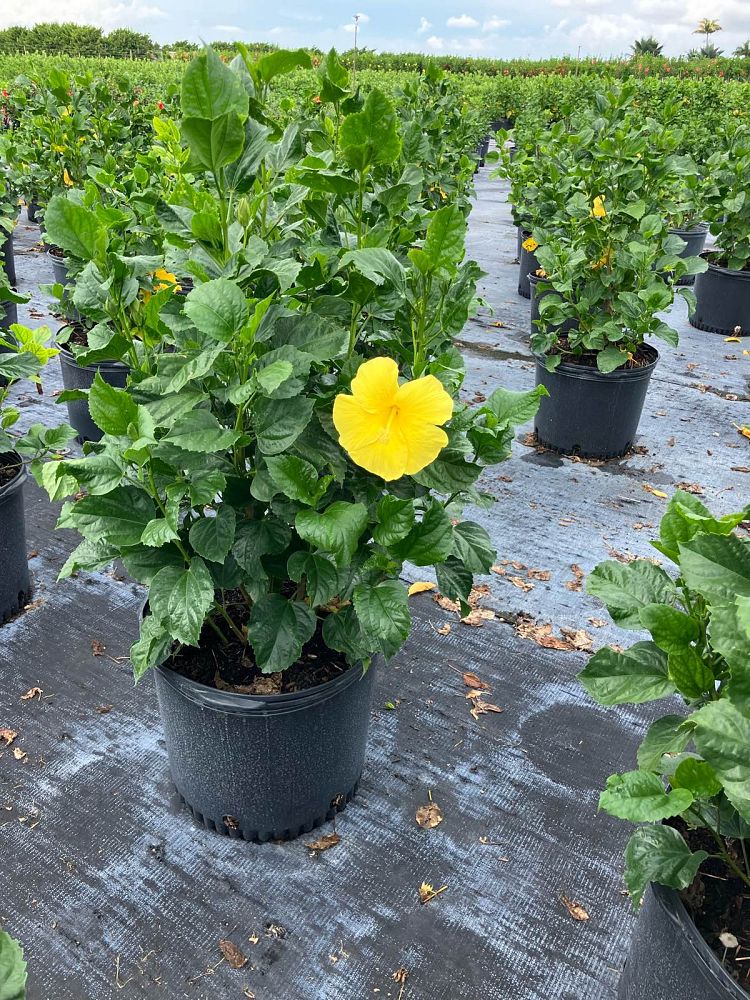
Florida nursery standards
Quality & grading
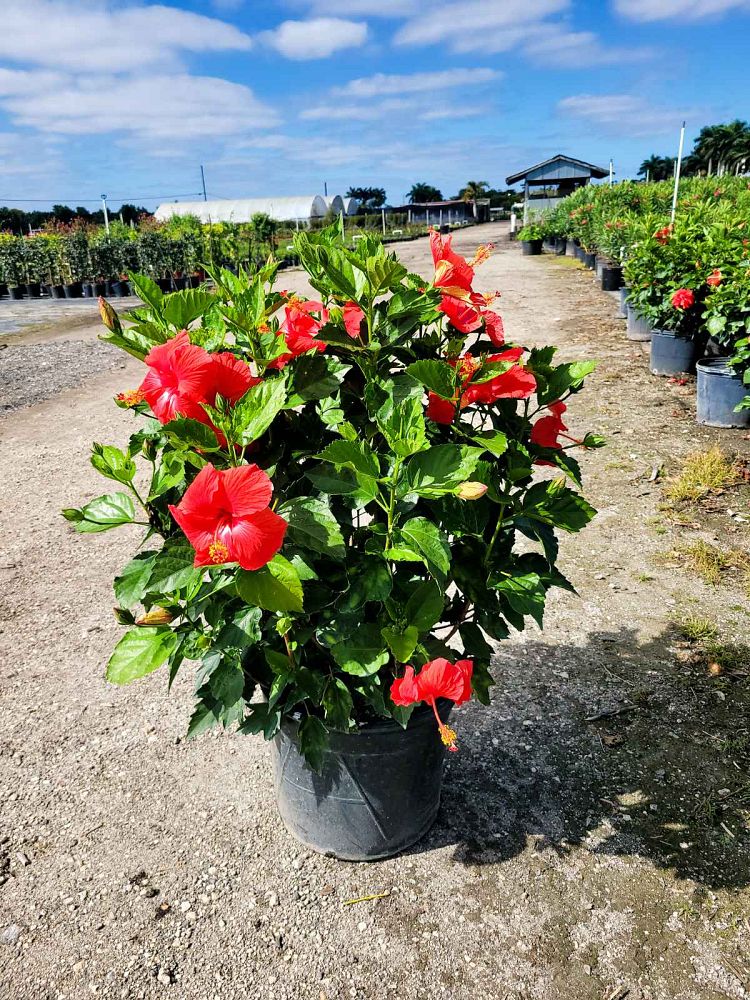
Sage recommends nursery material graded Florida No. 1 or better. The grade describes plant quality—not merely size—and should be verified together with the specified height, spread, clear trunk or container size.
- Specify Florida No. 1 or better material with a balanced framework, vigorous new growth and foliage distributed from low on the plant.
- Choose a named cultivar when flower color, form and mature habit are important; seedling and unnamed material can vary considerably.
- Inspect buds, shoot tips and leaf undersides for hibiscus bud weevil, thrips, aphids, whiteflies, mites, scale and mealybugs.
- Reject plants with severe circling roots, a loose root ball, chronic bud drop, distorted new growth, extensive chlorosis or branch dieback.
Installation guide
Planting for establishment
- Reserve enough room for an eight-to-twelve-foot shrub; keep it away from low windows, narrow walks and confined foundation beds.
- Plant in full sun for the strongest flowering, using light afternoon protection only where heat or reflected glare is unusually intense.
- Set the root flare at or slightly above finished grade in well-drained soil and keep mulch away from the stems.
- Provide airflow and service access so routine scouting and selective pruning can occur without forcing the plant into an undersized box.
Final planting depth, root-ball preparation, staking and irrigation should respond to the actual root system, soil, drainage and exposure observed on site.
Ongoing care
Water & fertilizer
Irrigation
Water the complete root ball and surrounding soil consistently during establishment. Mature hibiscus performs best with dependable moisture during active growth but should not remain saturated. Adjust irrigation to rainfall, drainage and exposure rather than relying on shallow daily cycles.
Fertilization
Use a controlled-release landscape fertilizer with appropriate potassium and micronutrients during active growth, following the label and local fertilizer restrictions. Avoid excessive nitrogen, which can create soft foliage at the expense of flowers. Distorted, cupped new leaves may indicate boron or another nutrient problem that should be diagnosed before correction.
Correct technique
Pruning & trimming
- Most hibiscus flowers develop on the outer extremities of new growth. Repeated shearing removes those shoots and their flower buds.
- Use selective reduction cuts to manage individual branches while preserving flowering tips and a natural rounded form.
- Schedule major size reduction far enough ahead of the desired display for new flowering wood to develop.
- If a hibiscus must be held continuously at three feet beneath a window, replace it with a naturally smaller plant instead of committing to permanent hard shearing.
Monitor before treating
Known pests & problems
Hibiscus bud weevil
Adults feed on buds and tender stems; larvae develop inside buds and can cause severe premature bud drop. Inspect fallen and damaged buds and confirm the pest before treatment.
Thrips, aphids, whiteflies and mites
Distorted tips, stippling, honeydew or bud injury requires close inspection. Preserve beneficial insects and use the least disruptive labeled response appropriate to the confirmed pest.
Nematodes and root stress
Poor vigor, wilting or decline may reflect root-knot nematodes, deep planting, drainage problems or inconsistent irrigation. Evaluate the root zone before treating foliage.
Symptoms often overlap. Confirm the cause before applying pesticides or fertilizer, and always follow the product label.
Landscape application
Design guidance
Recommended uses
Compatible pairings
Important cautions
- The mature 8–12-foot height and spread are frequently underestimated when nursery plants are installed beneath windows.
- Cold injury occurs below approximately 50°F and becomes severe near freezing; use in warm, protected Gulf Coast microclimates.
- Frequent shearing produces a green shell with few flowers and increases labor without correcting the original placement error.
- Low salt and wind tolerance make Chinese hibiscus a poor choice for exposed beachfront and high-wind locations.
Sage professional observationHibiscus is not a bad plant—it is often the wrong plant in a small space. Give it room to reach its natural flowering scale, or choose a compact shrub whose mature dimensions already fit the architecture.
Reference framework
Standards & sources
Profile guidance is informed by the Florida Department of Agriculture and Consumer Services’ Grades and Standards for Nursery Plants, University of Florida IFAS horticultural guidance and Sage’s regional landscape experience.
Site conditions, product labels and professional diagnosis govern the final recommendation.