Florida nursery standards
Quality & grading
Sage recommends nursery material graded Florida No. 1 or better. The grade describes plant quality—not merely size—and should be verified together with the specified height, spread, clear trunk or container size.
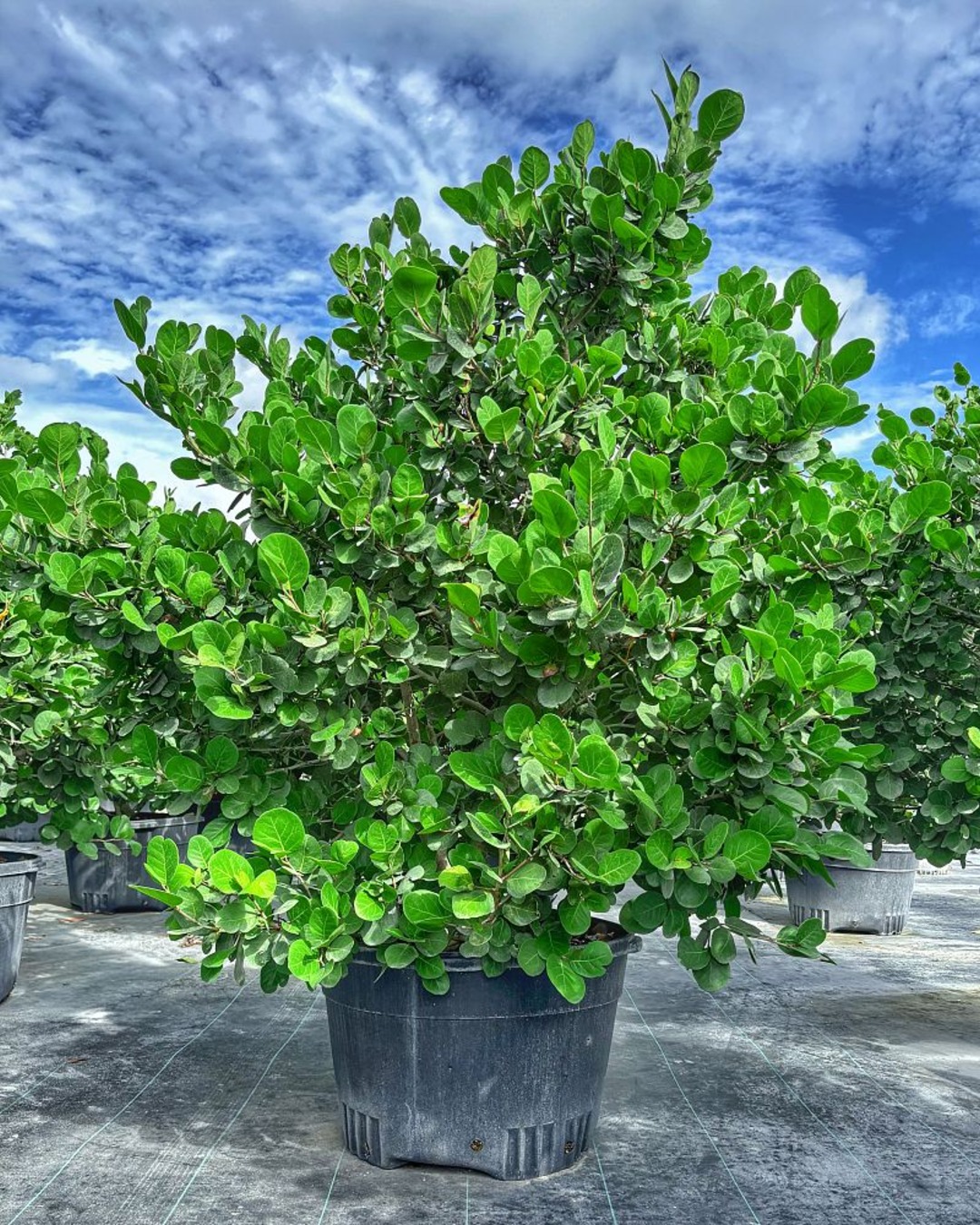
- Specify Florida No. 1 or better nursery stock with dense, balanced branching and foliage characteristic of the green inland form.
- Inspect the root ball for circling, kinked or pot-bound roots and verify that the plant is firmly established in its container.
- Confirm the desired form at purchase: full-to-ground hedge material, a selectively branched specimen or a trained multi-trunk tree.
- Reject plants with severe root defects, active scale, extensive leaf spotting, stem cankers or sparse interiors concealed by recent hard shearing.
Installation guide
Planting for establishment
- Allow at least five to eight feet of bed depth for a maintained screen and substantially more room for an informal shrub or small tree.
- For a hedge, space approximately 36–50 inches on center rather than crowding plants for immediate closure.
- Set the root flare at or slightly above finished grade and correct defective outer roots before backfilling.
- Keep adequate clearance from windows, air-conditioning equipment, pool screens, utilities and light-colored paving where fruit drop may matter.
Final planting depth, root-ball preparation, staking and irrigation should respond to the actual root system, soil, drainage and exposure observed on site.
Ongoing care
Water & fertilizer
Irrigation
Water the complete root ball and surrounding soil consistently through establishment, then reduce frequency and water deeply as needed. Established Cocoplum is drought tolerant, but newly planted material can decline in saturated soil even though mature plants tolerate seasonal freshwater inundation.
Fertilization
Cocoplum has low nutritional demand. If young plants need support, use a modest slow-release landscape fertilizer with micronutrients during active growth and follow the label. Once an established hedge reaches useful size, routine fertilization is rarely necessary; excess nitrogen increases pruning demand.
Correct technique
Pruning & trimming
- Use selective reduction cuts to build a dense, balanced hedge while preserving interior light and branching.
- Allow specimen plants to develop their natural dome or train young material gradually into a single- or multi-trunk small tree.
- Plan two or three maintenance prunings annually for a formal hedge rather than repeated severe shearing.
- Remove dead or cankered branches with sanitized tools and avoid cutting the plant into an unnaturally narrow wall.
Monitor before treating
Known pests & problems
Lobate lac scale and other scale insects
Inspect stems and leaf undersides for crusted insects, honeydew or decline. Confirm the pest and address plant stress before selecting treatment.
Root stress and root rot
Poor container roots, deep planting and chronically wet soil can cause slow decline. Correct the site or root problem rather than treating symptoms alone.
Algal leaf spot and canker
Persistent spotting or branch dieback warrants diagnosis. Improve airflow, avoid unnecessary overhead irrigation and remove confirmed infected wood carefully.
Symptoms often overlap. Confirm the cause before applying pesticides or fertilizer, and always follow the product label.
Landscape application
Design guidance
Recommended uses
Compatible pairings
Important cautions
- This is not a compact shrub: inland Cocoplum can reach 15–25 feet or more when unrestrained.
- Do not install beneath low windows or against screen enclosures unless ongoing size control is part of the maintenance plan.
- Fruit can attract wildlife and create seasonal litter or staining on pale paving.
- Minor foliage injury can occur near 32°F, with more serious stem injury around 28°F.
Sage professional observationGreen Cocoplum is the quiet, dependable form we use when the design needs a substantial native green mass rather than colorful new growth. It succeeds as a privacy hedge or naturalized small tree only when the bed and maintenance plan respect its full inland-form vigor.
Reference framework
Standards & sources
Profile guidance is informed by the Florida Department of Agriculture and Consumer Services’ Grades and Standards for Nursery Plants, University of Florida IFAS horticultural guidance and Sage’s regional landscape experience.
Site conditions, product labels and professional diagnosis govern the final recommendation.