Florida nursery standards
Quality & grading
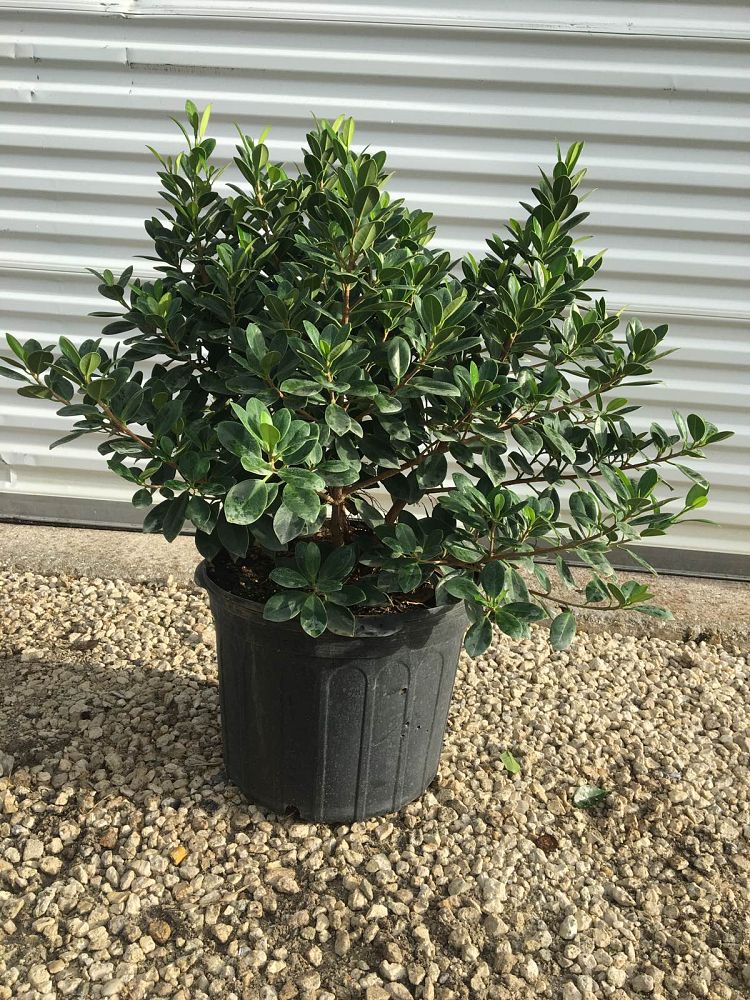
Sage recommends nursery material graded Florida No. 1 or better. The grade describes plant quality—not merely size—and should be verified together with the specified height, spread, clear trunk or container size.
- Specify Florida No. 1 or better with a dense, balanced canopy appropriate to container size.
- Select well-rooted plants that hold together when removed from the container.
- Reject severely root-bound plants, stem wounds, active scale or whitefly infestations and sparse, recently hard-sheared material.
Installation guide
Planting for establishment
- Space for mature width rather than installing tightly for instant coverage.
- Set the top of the root ball level with or slightly above finished grade.
- Loosen or correct circling outer roots before backfilling.
- Keep away from foundations, pipes and confined planters where mature roots lack room.
Final planting depth, root-ball preparation, staking and irrigation should respond to the actual root system, soil, drainage and exposure observed on site.
Ongoing care
Water & fertilizer
Irrigation
Maintain even moisture while establishing, then water deeply as needed and allow some drying between cycles. Avoid continuously wet beds and irrigation directed at foliage.
Fertilization
Use a modest slow-release landscape fertilizer during active growth if color or growth indicates need. Excess nitrogen produces weak, pest-prone growth and increases pruning demand.
Correct technique
Pruning & trimming
- Use selective hand pruning to maintain a natural mound and interior light penetration.
- Avoid repeated hard shearing, which creates a dense outer shell and bare interior.
- Remove dead twigs and freeze damage after the risk of further cold has passed.
Monitor before treating
Known pests & problems
Ficus whitefly
Watch for yellowing, leaf drop and small white insects beneath leaves; early professional identification improves control.
Thrips
Folded, distorted new leaves often signal thrips; prune only when it supports an integrated treatment plan.
Scale and mealybugs
Inspect sheltered stems and leaf undersides; manage ants and plant stress as part of control.
Symptoms often overlap. Confirm the cause before applying pesticides or fertilizer, and always follow the product label.
Landscape application
Design guidance
Recommended uses
Compatible pairings
Important cautions
- Roots can be aggressive where space is tightly confined.
- Cold can defoliate or damage plants near the northern edge of its range.
- Frequent shearing increases maintenance and hides pest problems.
Sage professional observationGreen Island ficus is one of our most dependable low masses when we want quiet, glossy structure beneath palms or around sculptural accents. We give it room and prune selectively.
Reference framework
Standards & sources
Profile guidance is informed by the Florida Department of Agriculture and Consumer Services’ Grades and Standards for Nursery Plants, University of Florida IFAS horticultural guidance and Sage’s regional landscape experience.
Site conditions, product labels and professional diagnosis govern the final recommendation.