Florida nursery standards
Quality & grading
Sage recommends nursery material graded Florida No. 1 or better. The grade describes plant quality—not merely size—and should be verified together with the specified height, spread, clear trunk or container size.
- Specify Florida No. 1 or better plants with a dense, balanced framework and multiple healthy shoots from low on the plant.
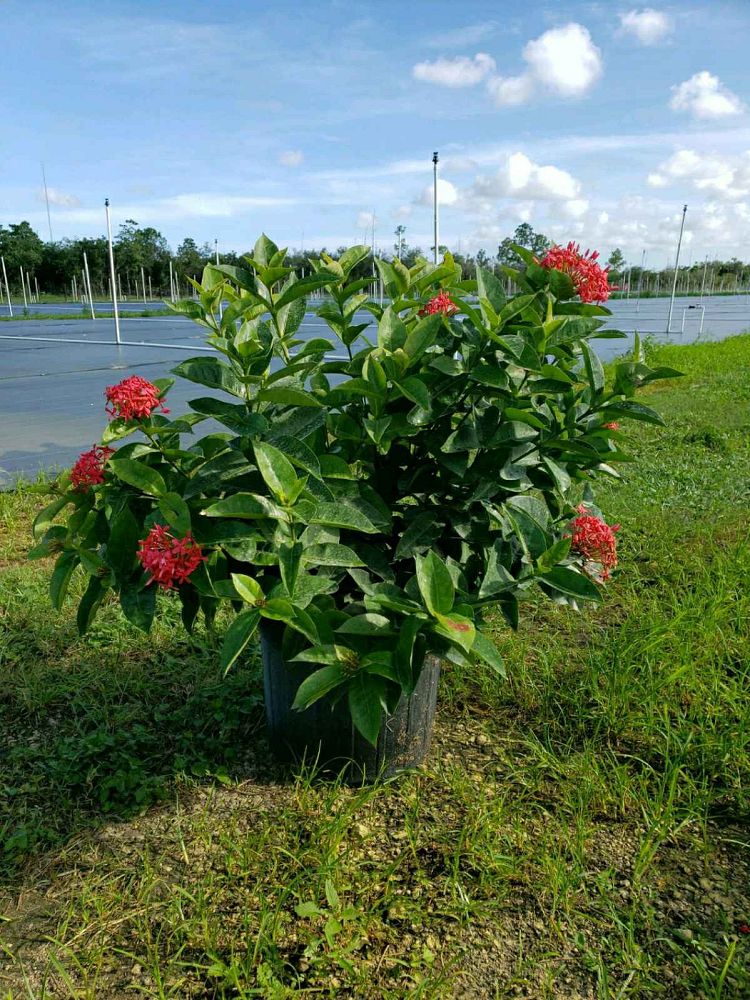
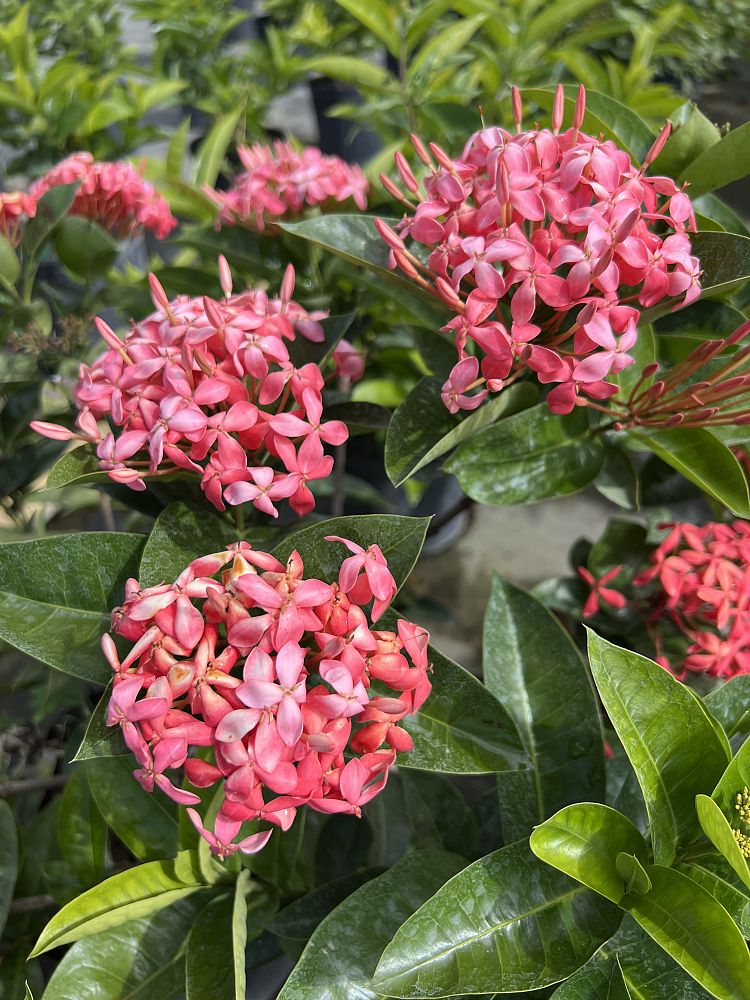
- Confirm the Nora Grant selection by its rosy-pink flower clusters, glossy foliage and compact landscape habit.
- Inspect new growth and leaf undersides for scale, aphids, mites and chlorosis before accepting material.
- Reject plants with severe root binding, unstable root balls, mushroom-root-rot symptoms, extensive yellowing or recent hard shearing.
Installation guide
Planting for establishment
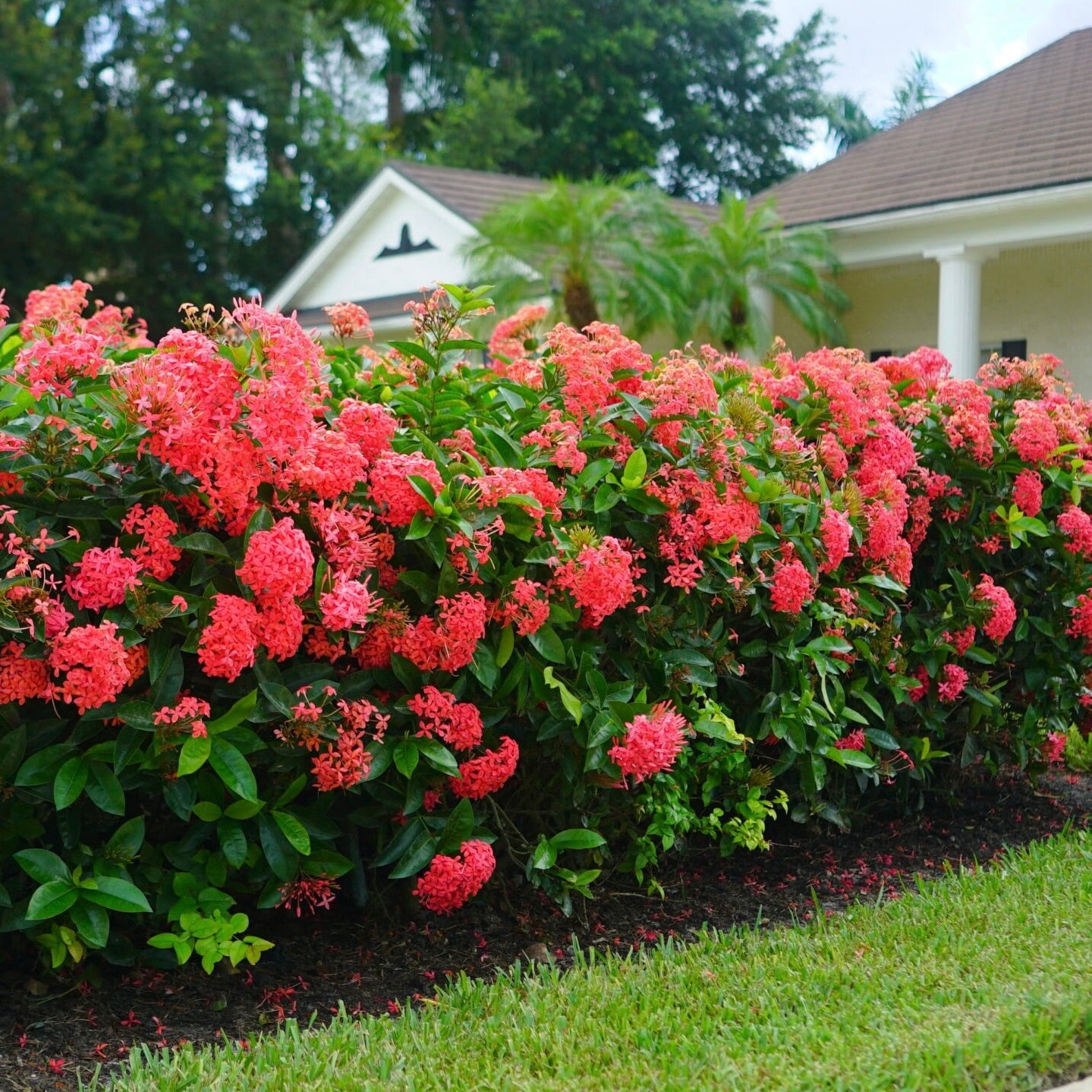
- Use beneath low windows, along entries or as a flowering border where a maintained 36–42-inch canopy fits the architecture.
- Plant in full sun to light partial shade on moist but well-drained acidic soil; flowering is strongest with abundant light.
- Space plants approximately three to four feet on center for a continuous hedge without forcing immediate crowding.
- Keep limestone, concrete washout and other strongly alkaline materials out of the root zone; high pH commonly causes iron and manganese chlorosis.
Final planting depth, root-ball preparation, staking and irrigation should respond to the actual root system, soil, drainage and exposure observed on site.
Ongoing care
Water & fertilizer
Irrigation
Water uniformly through establishment and maintain moderate moisture during active growth, allowing the soil to drain between cycles. Established ixora tolerates short dry periods, but repeated drought can reduce flowering and invite pest pressure. Avoid chronically wet soil, which increases root-disease risk.
Fertilization
Use a controlled-release fertilizer formulated for acid-loving landscape plants with complete micronutrients, following the label and local restrictions. Where soil pH is high, diagnose chlorosis before using an appropriate chelated iron or manganese product. Fertilizer cannot permanently correct an unsuitable alkaline root environment.
Correct technique
Pruning & trimming
- Allow new outer shoots to mature and flower; flowers are carried at the branch tips and are lost when every flush is immediately sheared.
- Use light selective tip pruning after a bloom cycle to maintain approximately 36–42 inches while preserving a softly rounded canopy.
- Avoid routine hard shearing into a rigid box, which reduces flower display and creates a leafy outer shell.
- Remove dead, crossing or pest-damaged shoots individually with clean tools rather than cutting the entire hedge.
Monitor before treating
Known pests & problems
Iron and manganese chlorosis
Yellow leaves with greener veins are common in alkaline soil near concrete or shell. Confirm pH and nutrient status, improve the root environment and use an appropriate chelate only as needed.
Scale, aphids and mites
Inspect foliage and stems for insects, honeydew, stippling and ant activity. Correct stress and protect beneficial insects before selecting a labeled treatment.
Nematodes and mushroom root rot
Weak sections or sudden decline can originate below ground. Evaluate roots, drainage and irrigation before replacing plants or treating the canopy.
Symptoms often overlap. Confirm the cause before applying pesticides or fertilizer, and always follow the product label.
Landscape application
Design guidance
Recommended uses
Compatible pairings
Important cautions
- Ixora prefers acidic soil and can become chlorotic in alkaline fill or immediately beside concrete foundations.
- Low salt tolerance limits use on exposed barrier-island and beachfront properties.
- The 36–42-inch target is a maintained design height; give the hedge enough width and root volume to remain healthy.
- Repeated shearing will reduce flowering even on a correctly scaled ixora.
Sage professional observationFor this thirty-inch dining-window sill, Nora Grant ixora is the right plant for the right place. Its 36–42-inch maintained canopy lets flowers remain visible from inside while preserving the view and eliminating the need to fight an eight-to-twelve-foot shrub.
Reference framework
Standards & sources
Profile guidance is informed by the Florida Department of Agriculture and Consumer Services’ Grades and Standards for Nursery Plants, University of Florida IFAS horticultural guidance and Sage’s regional landscape experience.
Site conditions, product labels and professional diagnosis govern the final recommendation.