Florida nursery standards
Quality & grading
Sage recommends nursery material graded Florida No. 1 or better. The grade describes plant quality—not merely size—and should be verified together with the specified height, spread, clear trunk or container size.
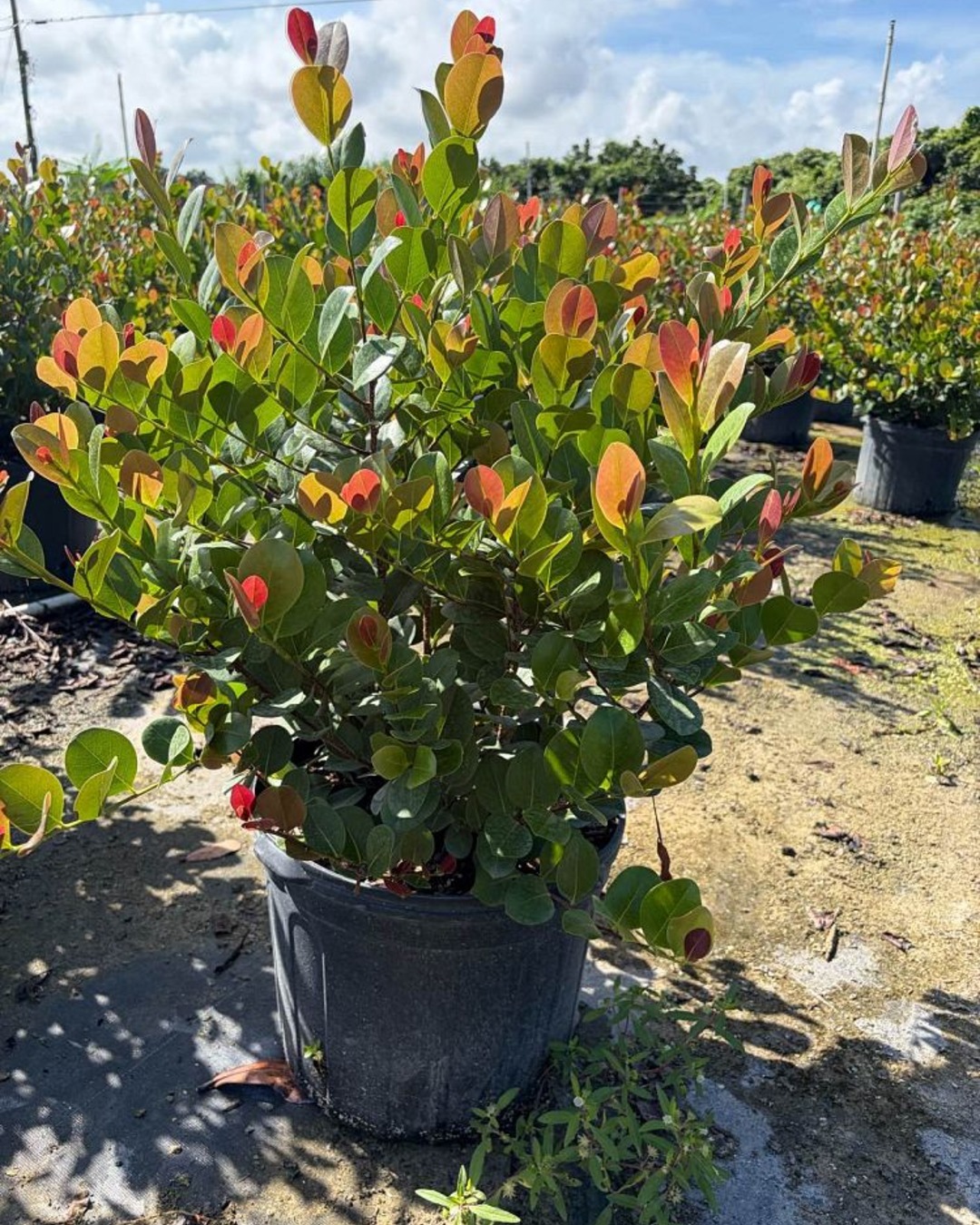
- Specify true-to-type, clonally propagated ‘Red Tip’ material with consistent burgundy new growth and Florida No. 1 or better quality.
- Choose dense, well-branched plants appropriate to the intended hedge, screen or tree form.
- Inspect for circling roots, a loose root ball, lobate lac scale, stem cankers and heavy recent shearing that hides a bare interior.
- Select uniform plants from the same production block when a consistent formal hedge is required.
Installation guide
Planting for establishment
- Provide five to eight feet of functional bed depth for a maintained screen and greater room for an informal specimen.
- Space hedge plants approximately 36–50 inches on center; do not double the quantity simply to force instant closure.
- Plant with the first major roots at or slightly above finished grade and correct defective outer roots before backfilling.
- Separate from pool screens, windows, mechanical equipment and narrow circulation where constant pruning would be required.
Final planting depth, root-ball preparation, staking and irrigation should respond to the actual root system, soil, drainage and exposure observed on site.
Ongoing care
Water & fertilizer
Irrigation
Provide consistent, deep irrigation to the full root ball during the first several months, adjusting for rainfall and drainage. Once established, Red Tip Cocoplum generally needs little supplemental water. Avoid shallow daily cycles and saturation around newly installed roots.
Fertilization
Use a modest slow-release landscape fertilizer with micronutrients only when establishment, color or growth indicates need. Established inland Cocoplum has low nutritional demand, and excessive nitrogen produces soft growth that requires more frequent trimming.
Correct technique
Pruning & trimming
- Begin structural pruning early to create dense branching at the desired hedge height.
- Use selective cuts between scheduled trims so the hedge retains foliage inside rather than forming a thin outer shell.
- Train a specimen gradually into a rounded shrub or multi-trunk tree; do not top mature stems abruptly.
- Sanitize pruning tools when canker or unexplained dieback is present.
Monitor before treating
Known pests & problems
Lobate lac scale and scale insects
Watch for crusted stems, reduced vigor, honeydew and sooty mold. Identify the insect and combine targeted control with improved plant health.
Weevils
Chewed foliage alone rarely justifies broad treatment. Confirm active insects and the level of damage first.
Algal leaf spot and Botryosphaeria canker
Improve airflow and irrigation practices; diagnose spreading branch dieback before pruning or applying fungicides.
Symptoms often overlap. Confirm the cause before applying pesticides or fertilizer, and always follow the product label.
Landscape application
Design guidance
Recommended uses
Compatible pairings
Important cautions
- Red Tip is an inland cultivar capable of 15–25 feet or more; it is not a naturally compact foundation shrub.
- Frequent tight shearing suppresses the colorful new growth that gives the cultivar its value.
- Purple fruit can create seasonal litter and staining near pools or pale paving.
- Cold damage is possible at 32°F and becomes more severe around 28°F.
Sage professional observationRed Tip works best when we want a native privacy mass with a subtle seasonal color shift. We give it enough depth to remain healthy, trim it on a deliberate schedule and let the burgundy flush soften the form between pruning cycles.
Reference framework
Standards & sources
Profile guidance is informed by the Florida Department of Agriculture and Consumer Services’ Grades and Standards for Nursery Plants, University of Florida IFAS horticultural guidance and Sage’s regional landscape experience.
Site conditions, product labels and professional diagnosis govern the final recommendation.