Florida nursery standards
Quality & grading
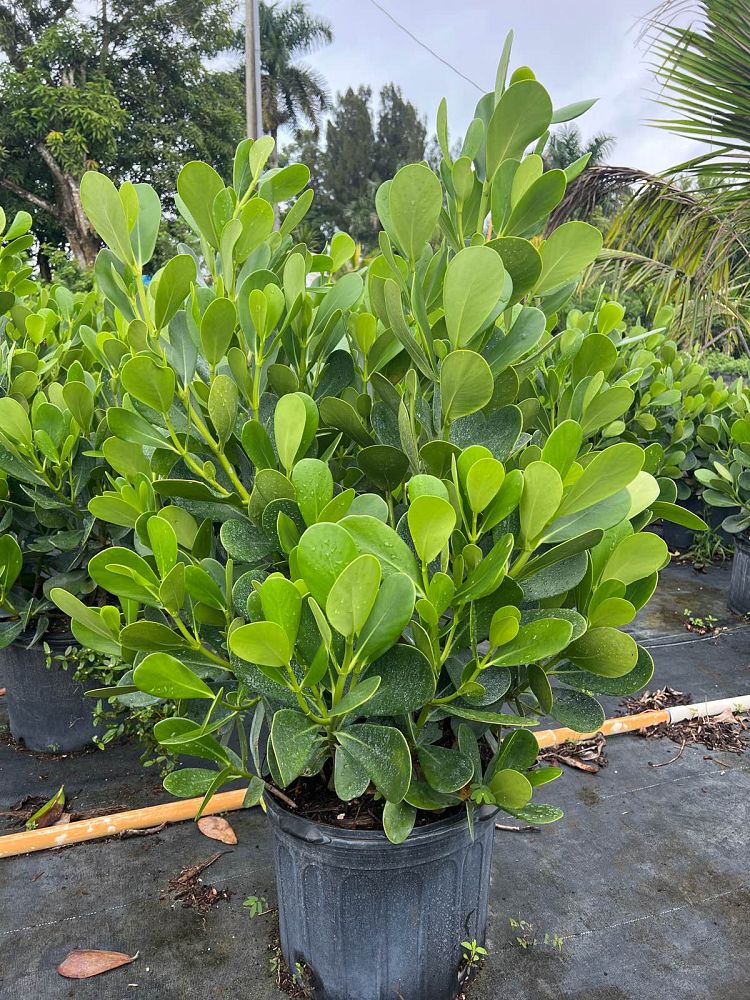
Sage recommends nursery material graded Florida No. 1 or better. The grade describes plant quality—not merely size—and should be verified together with the specified height, spread, clear trunk or container size.
- Specify Florida No. 1 or better with dense, balanced branching from low on the plant.
- Choose well-rooted plants sized consistently across the hedge run.
- Reject severely circling roots, recent hard cuts, sparse interiors, stem damage or active scale and mealybugs.
Installation guide
Planting for establishment
- Space for the intended maintained width rather than touching plants at installation.
- Set root balls level with or slightly above grade and correct circling outer roots.
- Create a continuous, well-drained soil volume along the hedge line.
- Keep plants far enough from walls, fences and utilities for future pruning access.
Final planting depth, root-ball preparation, staking and irrigation should respond to the actual root system, soil, drainage and exposure observed on site.
Ongoing care
Water & fertilizer
Irrigation
Irrigate uniformly along the entire hedge during establishment. Once rooted, water deeply during extended dry periods and avoid frequent shallow cycles or permanently wet soil.
Fertilization
Apply a slow-release landscape fertilizer with micronutrients only as needed during active growth. Uniform broadcasting and irrigation prevent uneven hedge color and growth.
Correct technique
Pruning & trimming
- Begin structural pruning early to encourage branching without repeatedly cutting every shoot at one plane.
- Maintain a slightly wider base than top so light reaches lower foliage.
- Use periodic selective thinning to prevent a leafy shell and dead interior.
Monitor before treating
Known pests & problems
Scale and mealybugs
Inspect interior stems and leaf undersides; control ants and avoid excess nitrogen.
Thrips
Distorted new growth may require identification before treatment.
Root decline
Yellowing sections often trace to uneven irrigation, poor drainage, deep planting or construction damage rather than a single pest.
Symptoms often overlap. Confirm the cause before applying pesticides or fertilizer, and always follow the product label.
Landscape application
Design guidance
Recommended uses
Compatible pairings
Important cautions
- Frequent hard shearing increases labor and can thin the hedge interior.
- Cold injury may occur in exposed locations.
- Improper spacing can create chronic competition and bare lower growth.
Sage professional observationSmall-leaf clusia makes an excellent quiet backdrop. We design the hedge at its realistic maintained size, then layer palms and accents in front so the screen supports the composition.
Reference framework
Standards & sources
Profile guidance is informed by the Florida Department of Agriculture and Consumer Services’ Grades and Standards for Nursery Plants, University of Florida IFAS horticultural guidance and Sage’s regional landscape experience.
Site conditions, product labels and professional diagnosis govern the final recommendation.