Florida nursery standards
Quality & grading
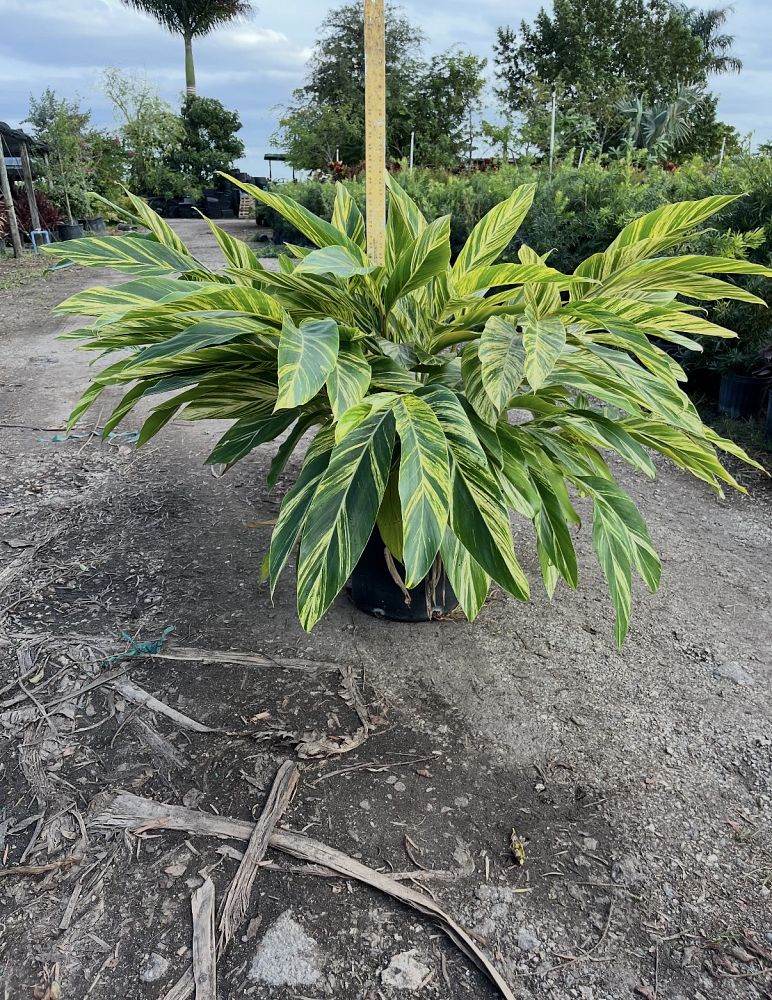
Sage recommends nursery material graded Florida No. 1 or better. The grade describes plant quality—not merely size—and should be verified together with the specified height, spread, clear trunk or container size.
- Specify Florida No. 1 or better material with a full, balanced clump, strong variegation and healthy stems arising from a firmly established root system.
- Choose plants with clean foliage and multiple vigorous shoots rather than a narrow, recently divided specimen selected only for immediate height.
- Inspect leaf undersides and growing tips for mites, scale and stress-related discoloration before accepting nursery material.
- Reject plants with extensive leaf scorch, weak or collapsing stems, sour saturated media, severe root binding or evidence of rhizome decay.
Installation guide
Planting for establishment
- Use in morning sun, filtered light or partial shade; protect the broad foliage from intense reflected afternoon heat and drying wind.
- Allow approximately five to eight feet of eventual bed width and keep the mature foliage clear of walkways, screens and mechanical equipment.
- Plant at the original nursery depth in moist, fertile, well-drained soil and keep mulch away from the bases of the stems.
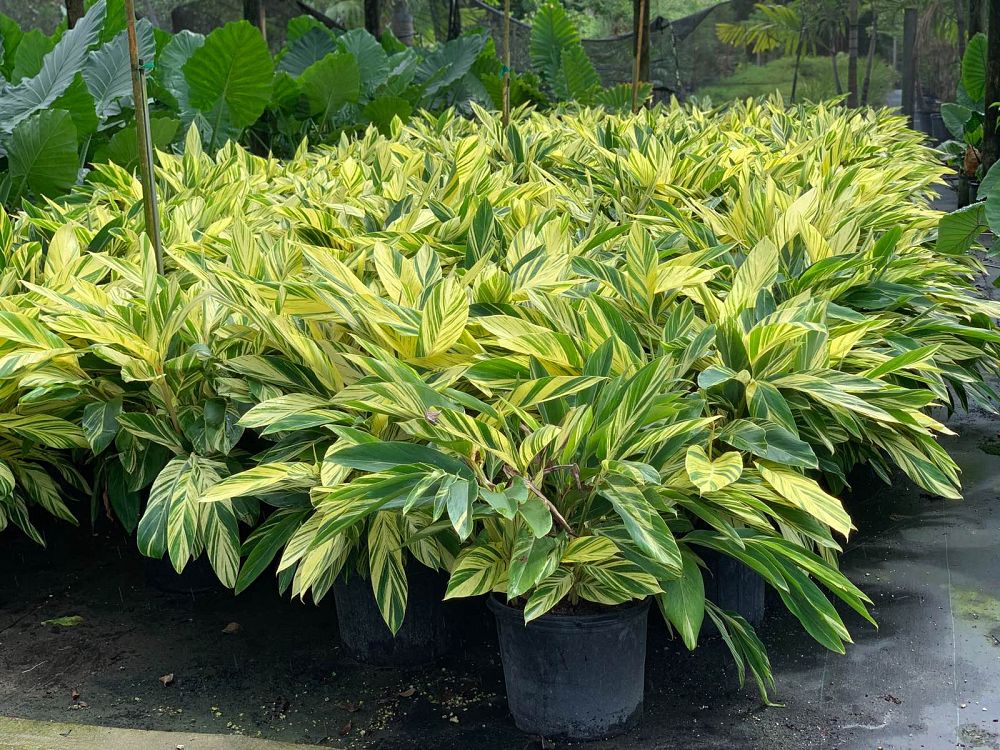
- For mass planting, space individual plants approximately twenty-four to thirty-six inches apart while still providing enough overall room for the colony to spread.
Final planting depth, root-ball preparation, staking and irrigation should respond to the actual root system, soil, drainage and exposure observed on site.
Ongoing care
Water & fertilizer
Irrigation
Water the complete root ball and surrounding soil consistently during establishment, then maintain moderate, even moisture while allowing the root zone to drain. Established plants tolerate short dry periods, but prolonged drought can curl or scorch the large leaves and reduce foliage quality. Avoid permanent saturation and irrigation that repeatedly leaves hard-water residue on the foliage.
Fertilization
Use a modest controlled-release landscape fertilizer with complete micronutrients when growth or soil conditions indicate need, following the label and local restrictions. Excess nitrogen can create soft, elongated growth that is more vulnerable to wind damage. Organic matter and a stable mulch layer can help support even soil moisture without forcing excessive growth.
Correct technique
Pruning & trimming
- Remove damaged, cold-burned or spent stems individually near ground level instead of cutting every stem across the middle.
- Avoid frequent hedge-style shearing; flowers develop on mature stems and are sacrificed when the entire clump is repeatedly shortened.
- Thin older colonies selectively by removing crowded stems and unwanted rhizome sections while preserving vigorous flowering-age growth.
- Divide or relocate portions during active growth when the colony exceeds its intended space, and remove frost damage after the risk of additional cold has passed.
Monitor before treating
Known pests & problems
Spider mites
Hot, dry conditions can produce stippling, fading and webbing on leaf undersides. Confirm active mites, improve plant moisture and exposure, and use the least disruptive labeled response.
Leaf scorch and wind injury
Brown margins, folded leaves and shredding often reflect intense afternoon sun, drying wind, salt exposure or inconsistent irrigation rather than disease.
Rhizome and root stress
Weak stems, yellowing or collapse may result from excessive moisture, deep planting or poor drainage. Inspect the root zone before applying fertilizer or pesticide.
Symptoms often overlap. Confirm the cause before applying pesticides or fertilizer, and always follow the product label.
Landscape application
Design guidance
Recommended uses
Compatible pairings
Important cautions
- The mature colony can reach five to eight feet across and is unsuitable for narrow beds beneath low windows.
- Low salt tolerance makes it a poor choice for exposed beachfront sites, saline soil, saltwater flooding or frequent saltwater-pool splash.
- Broad leaves are easily damaged by strong coastal wind and perform best in a protected courtyard or beneath a high canopy.
- Rhizomes spread gradually and should not be placed where unrestricted expansion would interfere with paving, equipment or tight circulation.
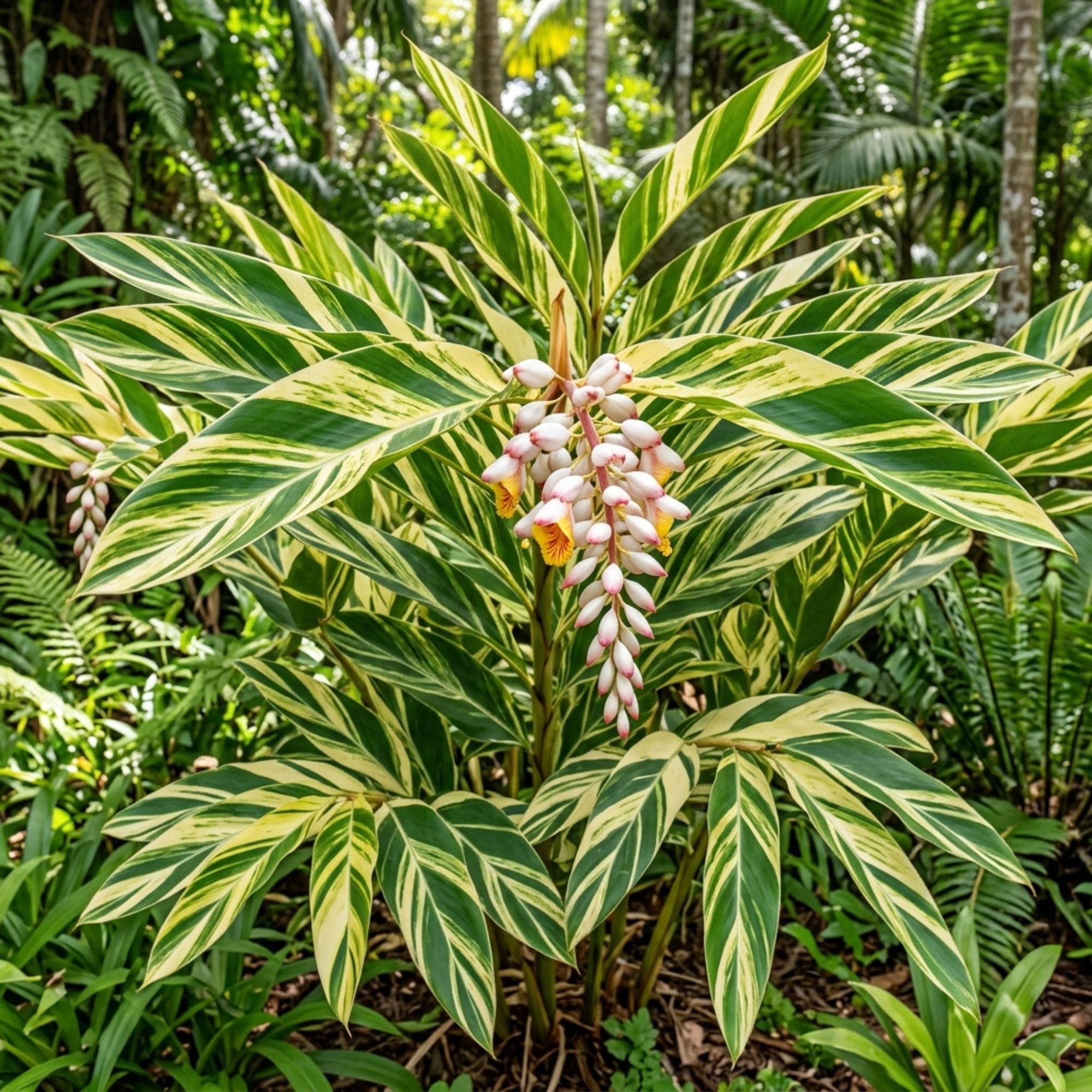
Sage professional observationVariegated Shell Ginger is strongest when used as one confident foliage mass in a protected, partially shaded setting. We give it enough room to form a broad colony and preserve mature stems so the plant can provide both luminous foliage and its distinctive shell-shaped flowers.
Reference framework
Standards & sources
Profile guidance is informed by the Florida Department of Agriculture and Consumer Services’ Grades and Standards for Nursery Plants, University of Florida IFAS horticultural guidance and Sage’s regional landscape experience.
Site conditions, product labels and professional diagnosis govern the final recommendation.