Florida nursery standards
Quality & grading
Sage recommends nursery material graded Florida No. 1 or better. The grade describes plant quality—not merely size—and should be verified together with the specified height, spread, clear trunk or container size.
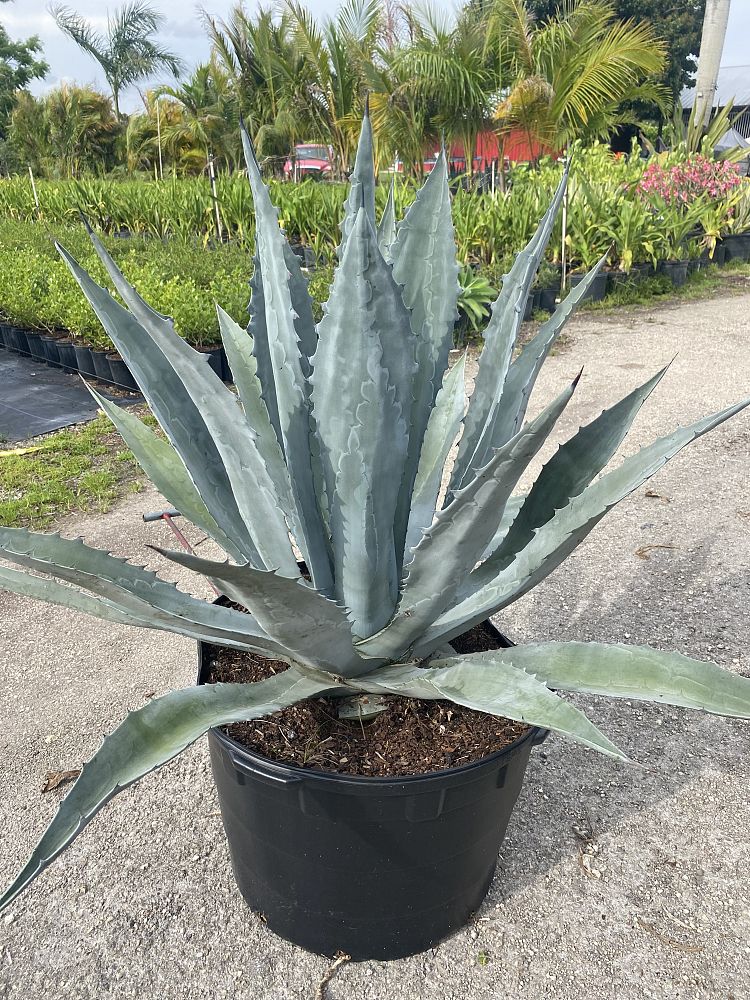
- Specify Florida No. 1 or better with a centered, symmetrical rosette and firm leaves.
- Choose a root system that holds the container medium without being severely pot-bound.
- Reject plants with a soft center, basal rot, widespread scale, sunken lesions or major mechanical damage.
Installation guide
Planting for establishment
- Install on a raised or sharply drained site; keep the crown slightly above finished grade.
- Use mineral-rich, fast-draining soil and keep mulch away from the crown.
- Allow the full mature diameter plus a safety buffer from walks, drives and play spaces.
- Handle with protective equipment and preserve the central growing point.
Final planting depth, root-ball preparation, staking and irrigation should respond to the actual root system, soil, drainage and exposure observed on site.
Ongoing care
Water & fertilizer
Irrigation
Water thoroughly after planting, then allow the root zone to dry substantially between cycles. Summer rainfall often supplies enough moisture; automatic irrigation must not keep the crown wet.
Fertilization
Agaves generally need little fertilizer. If growth or color indicates need, apply a low-rate, slow-release product during warm weather and keep it out of the rosette.
Correct technique
Pruning & trimming
- Remove only dead or badly damaged lower leaves using clean, sharp tools.
- Do not clip terminal spines or shear the rosette into a smaller shape.
- Remove offsets selectively if a solitary architectural form is desired.
Monitor before treating
Known pests & problems
Agave snout weevil
Rapid collapse, a loosening center or foul basal tissue requires prompt removal and inspection of nearby agaves.
Scale insects
Confirm crusted insects on leaves before treatment; improve light, airflow and plant vigor.
Crown and root rot
Usually associated with poor drainage, excess irrigation or crown injury; correct the site condition first.
Symptoms often overlap. Confirm the cause before applying pesticides or fertilizer, and always follow the product label.
Landscape application
Design guidance
Recommended uses
Compatible pairings
Important cautions
- Terminal and marginal spines can cause serious injury.
- The plant is monocarpic: the main rosette dies after flowering.
- Offsets can expand the planting beyond its intended footprint.
Sage professional observationBlue agave is visual punctuation. One carefully placed specimen against soft foliage or pale stone is usually more powerful than a crowded group.
Reference framework
Standards & sources
Profile guidance is informed by the Florida Department of Agriculture and Consumer Services’ Grades and Standards for Nursery Plants, University of Florida IFAS horticultural guidance and Sage’s regional landscape experience.
Site conditions, product labels and professional diagnosis govern the final recommendation.