Florida nursery standards
Quality & grading
Sage recommends nursery material graded Florida No. 1 or better. The grade describes plant quality—not merely size—and should be verified together with the specified height, spread, clear trunk or container size.
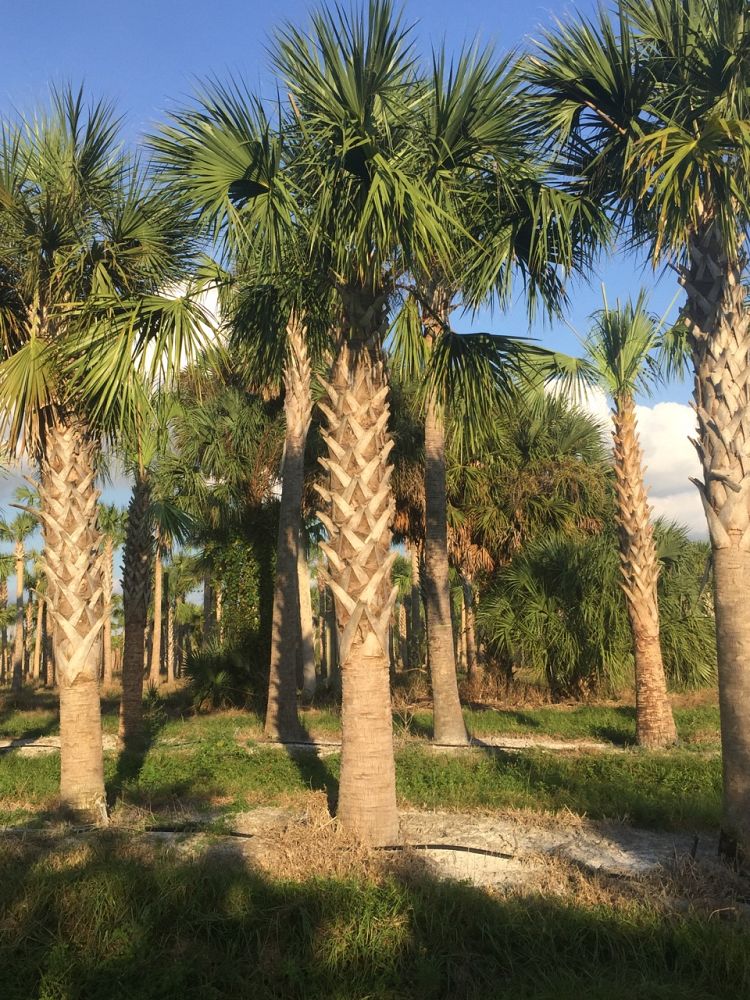
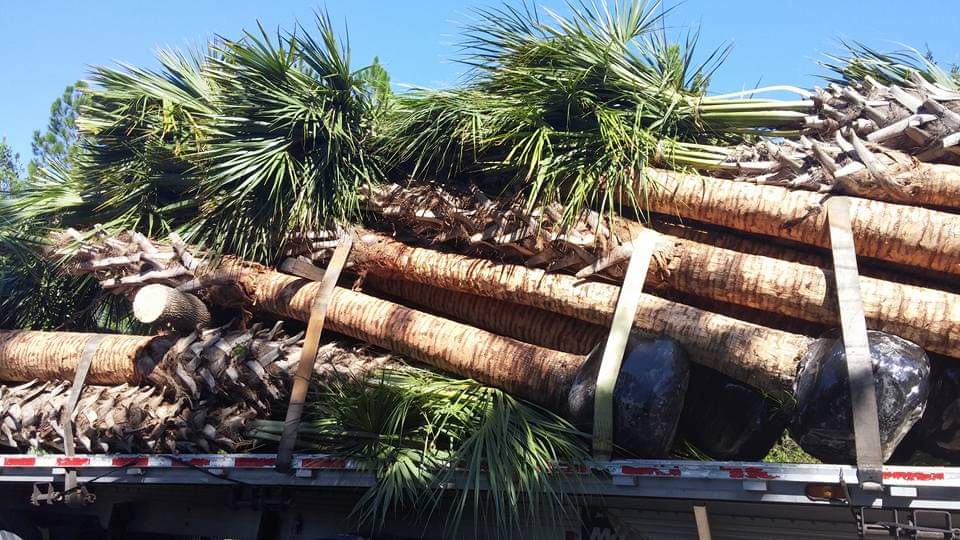
- Specify legally and responsibly sourced Sabal palmetto graded Florida No. 1 or better, with a sound trunk, intact terminal bud and no large wounds.
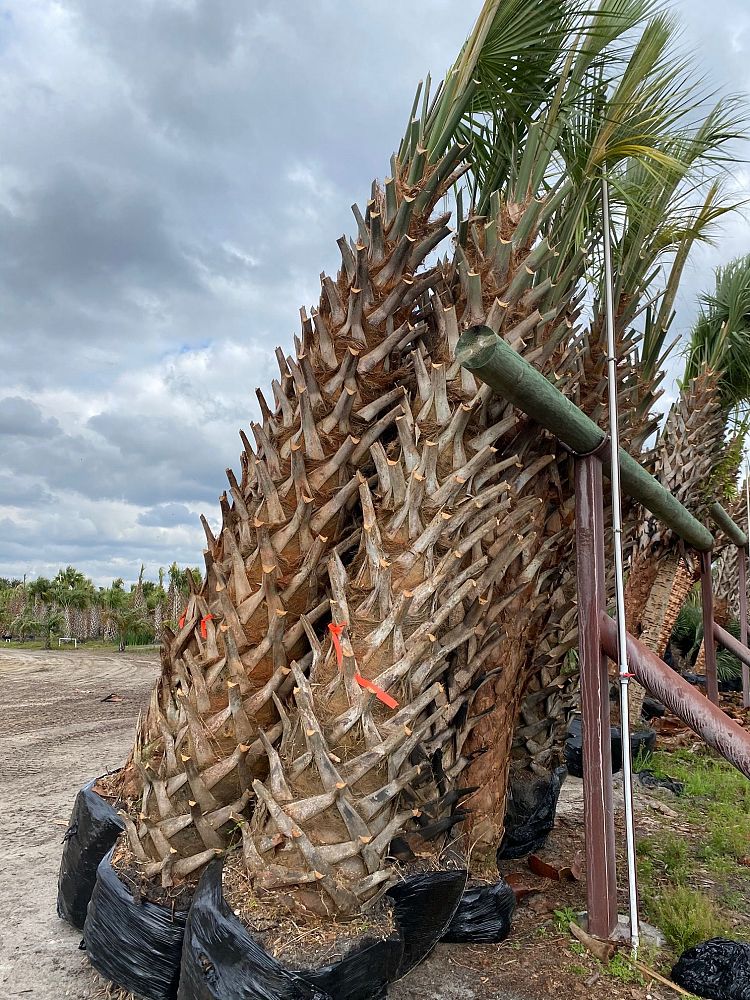
- Favor regenerated field-grown material when practical. A regenerated palm has been held after digging to initiate replacement roots before final shipment.
- Confirm the specified clear-trunk or overall height, trunk character and whether the design calls for naturally retained leaf bases—boots—or a naturally slick trunk.
- Avoid palms with punctures from improper bracing, deep trunk cuts, a damaged spear, soft tissue, severe nutrient decline or an unstable root ball.
- Field-dug palms with less than roughly 10 feet of trunk can have lower survival because they store less water than taller specimens. Evaluate the source and preparation rather than buying on height alone.
Installation guide
Planting for establishment
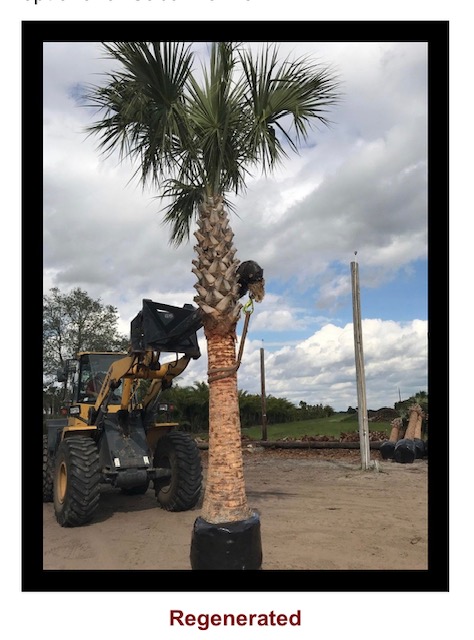
- Install at the palm’s original growing depth. Never bury the root-initiation zone with soil, mulch or decorative stone.
- Preserve the root ball during handling and support the palm without driving nails, spikes or screws into the trunk.
- Allow approximately eight to ten feet from buildings and screen enclosures, six to eight feet from pools and decks, and five to six feet from walks.
- Keep the mature crown outside overhead utilities and vehicle-clearance areas, and provide open soil or mulch rather than continuous pavement around the base.
- Field-dug palms may arrive with leaves removed as a one-time water-conservation practice. This transplant preparation is different from repeatedly hurricane-cutting an established palm.
- Remove temporary bracing only after the regenerated root system provides stable anchorage; timing must respond to site exposure, palm size and observed stability.
Final planting depth, root-ball preparation, staking and irrigation should respond to the actual root system, soil, drainage and exposure observed on site.
Ongoing care
Water & fertilizer
Irrigation
A field-dug Sabal loses nearly all of its functional roots because cut Sabal roots generally die back rather than branching. The palm must form new roots from the trunk base, a process that may require eight months or longer. Water the complete root ball and adjoining soil deeply, maintain consistent moisture without chronic saturation, adjust for rainfall and drainage, and continue monitoring well beyond the first few weeks. Once fully established, Sabal Palm becomes highly drought tolerant.
Fertilization
Use a controlled-release fertilizer formulated for Florida palms, supplying appropriate potassium, magnesium and complete micronutrients according to the label and local seasonal restrictions. Potassium deficiency begins on older leaves as translucent yellow-orange spotting, marginal discoloration and leaflet-tip necrosis. Retain partially green deficient leaves while correcting the program because the palm continues moving mobile nutrients from those leaves into newer growth.
Correct technique
Pruning & trimming
- Maintain a naturally full, rounded crown and remove only completely dead, broken or demonstrably hazardous fronds.
- Do not remove healthy green leaves above the nine-and-three position for appearance or storm preparation; hurricane cutting does not strengthen the palm.
- Retain partially green potassium-deficient leaves while the nutrition program is corrected.
- Allow retained leaf bases, or boots, to release naturally. Do not aggressively strip or carve the trunk.
- Avoid climbing spikes and any cut or puncture into living trunk tissue, and never damage the terminal growing point.
- After severe weather, inspect the crown, trunk and root stability and allow time for new growth before declaring a damaged crown dead.
Monitor before treating
Known pests & problems
Potassium deficiency
Older leaves show yellow-orange translucent spotting, necrotic leaflet tips and premature decline. Use a complete palm-fertilizer program and preserve substantially green leaves while recovery occurs.
Lethal bronzing
Premature fruit drop, rapid lower-canopy discoloration and eventual spear-leaf death require prompt professional diagnosis. Sarasota and Manatee counties are within the historically affected region, and there is no curative treatment after infection is confirmed.
Palmetto weevil
Recently transplanted, cold-injured or otherwise stressed palms are most vulnerable. Sudden spear collapse, odor or crown failure requires immediate evaluation.
Ganoderma butt rot
A shelf-like conk near the lower trunk indicates advanced internal decay. There is no cure; the palm should be professionally evaluated and ordinarily removed for safety.
Symptoms often overlap. Confirm the cause before applying pesticides or fertilizer, and always follow the product label.
Landscape application
Design guidance
Recommended uses
Compatible pairings
Important cautions
- Native status does not eliminate the need for careful irrigation during the long root-regeneration period after transplanting.
- High salt-spray tolerance does not mean the root system should receive repeated seawater or brackish inundation.
- Never plant deeper than the original grade or conceal the trunk base under excess mulch, soil or decorative stone.
- Trunk wounds do not compartmentalize like wounds in many woody trees and can provide entry points for irreversible decay.
- Naturally booted and slick trunks are both normal. Trunk character should be selected intentionally rather than created through aggressive stripping.
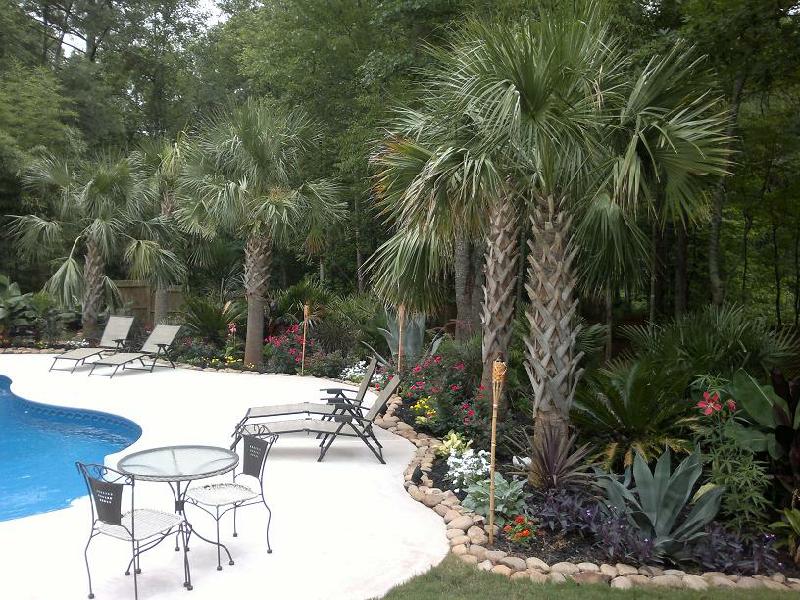
Sage professional observationSabal Palm is strongest when it is treated as intentional Florida architecture rather than inexpensive filler. We favor varied-height groupings, ample canopy space and visible trunk character, then protect the investment with correct planting depth and patient establishment care.
Reference framework
Standards & sources
Profile guidance is informed by the Florida Department of Agriculture and Consumer Services’ Grades and Standards for Nursery Plants, University of Florida IFAS horticultural guidance and Sage’s regional landscape experience.
Site conditions, product labels and professional diagnosis govern the final recommendation.