Florida nursery standards
Quality & grading
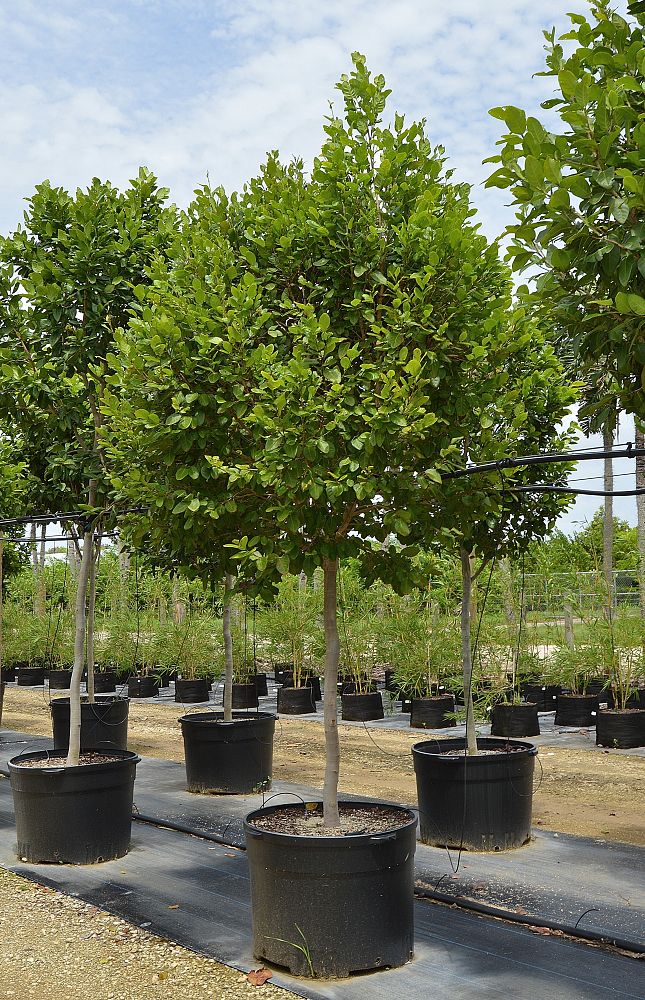
Sage recommends nursery material graded Florida No. 1 or better. The grade describes plant quality—not merely size—and should be verified together with the specified height, spread, clear trunk or container size.
- Specify Florida No. 1 or better nursery stock.
- Select a single, dominant trunk with sound branch structure and a balanced crown.
- Reject trees with severe circling roots, buried root flares, trunk wounds, active pests or a root ball that shifts independently of the trunk.
Installation guide
Planting for establishment
- Expose the first major root and set the root flare at or slightly above finished grade.
- Dig a wide, shallow planting hole; do not amend only the backfill within the hole.
- Keep mulch off the trunk and root flare.
- Stake only when stability requires it, using flexible ties; remove supports after establishment.
Final planting depth, root-ball preparation, staking and irrigation should respond to the actual root system, soil, drainage and exposure observed on site.
Ongoing care
Water & fertilizer
Irrigation
Water the entire root ball and adjacent soil consistently during establishment, then taper frequency as roots expand. Established trees tolerate short dry periods, but prolonged saturation should be avoided.
Fertilization
Base fertilization on site conditions and visible need. If required after establishment, use a slow-release landscape fertilizer with micronutrients, applied over the root zone according to the label. Keep fertilizer away from the trunk.
Correct technique
Pruning & trimming
- Remove broken, crossing or poorly attached branches while preserving the dominant leader.
- Use reduction or thinning cuts rather than topping.
- Avoid removing more than a modest portion of the live canopy in one visit.
Monitor before treating
Known pests & problems
Scale insects
Inspect stems and leaf undersides; manage plant stress and confirm the pest before treating.
Sooty mold
Usually follows honeydew-producing insects; address the insect source rather than washing foliage alone.
Leaf spots
Improve air movement and avoid unnecessary overhead irrigation; diagnose persistent decline before applying fungicide.
Symptoms often overlap. Confirm the cause before applying pesticides or fertilizer, and always follow the product label.
Landscape application
Design guidance
Recommended uses
Compatible pairings
Important cautions
- Fallen fruit can stain pale paving.
- Allow adequate canopy and root space away from structures.
- Cold sensitivity limits reliable use north of its warm-zone range.
Sage professional observationWe like pigeon plum where a native tree needs to feel refined rather than rustic. Its bark and new foliage reward close viewing, while its restrained scale suits courtyards and coastal residential properties.
Reference framework
Standards & sources
Profile guidance is informed by the Florida Department of Agriculture and Consumer Services’ Grades and Standards for Nursery Plants, University of Florida IFAS horticultural guidance and Sage’s regional landscape experience.
Site conditions, product labels and professional diagnosis govern the final recommendation.