Florida nursery standards
Quality & grading
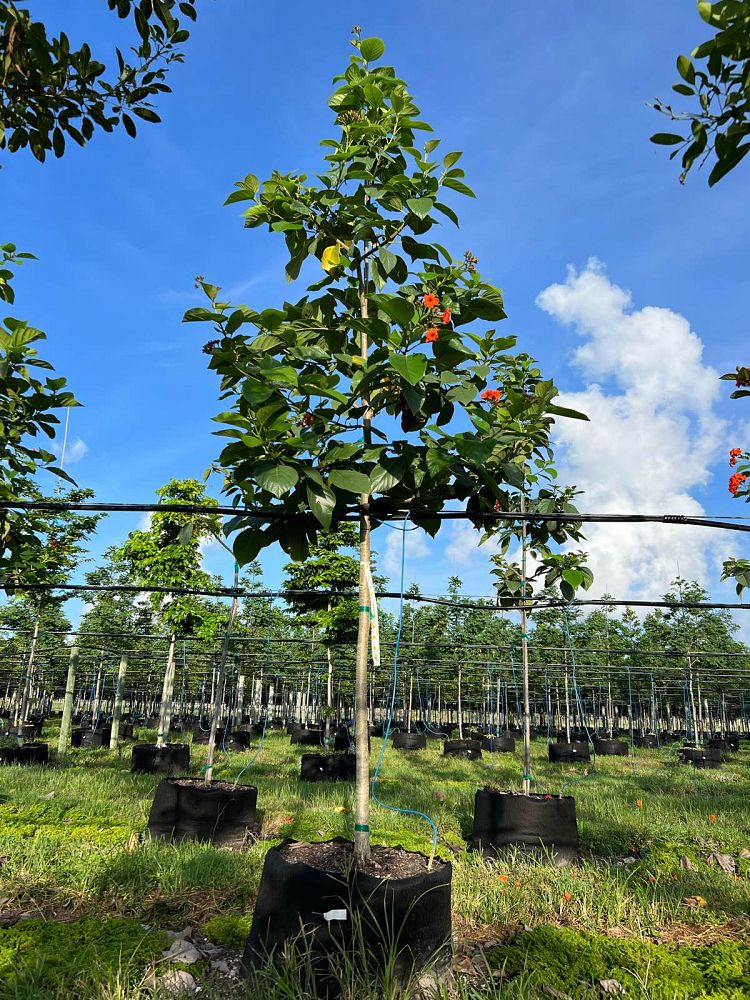
Sage recommends nursery material graded Florida No. 1 or better. The grade describes plant quality—not merely size—and should be verified together with the specified height, spread, clear trunk or container size.
- Specify Florida No. 1 or better stock with a well-tapered trunk or balanced multi-trunk structure and evenly distributed branches.
- Select grafted or clonally propagated material when a consistent flower color or named selection is important.
- Inspect the root flare and root ball for circling roots, instability or buried trunk tissue.
- Reject trees with included bark, severe branch crowding, trunk injury, extensive leaf spotting or active Geiger beetle damage.
Installation guide
Planting for establishment
- Choose a warm, protected Zone 10b–11 location with full sun for the strongest flowering and crown density.
- Allow approximately eight to ten feet from buildings, pools and major paving, with more room when the canopy will remain low and broad.
- Expose the first major roots and place them at or slightly above finished grade in well-drained soil.
- Use near the coast for aerosol salt tolerance, but not where the root zone receives repeated saltwater flooding.
Final planting depth, root-ball preparation, staking and irrigation should respond to the actual root system, soil, drainage and exposure observed on site.
Ongoing care
Water & fertilizer
Irrigation
Water the full root ball and adjacent soil consistently during establishment, then transition to deep, infrequent irrigation. Established Orange Geiger is drought tolerant, but prolonged drought can reduce flowering and canopy quality. Avoid chronically wet soil and constant shallow irrigation.
Fertilization
Use modest, slow-release landscape nutrition with micronutrients only when site conditions or diagnosed deficiency indicate need. Excess nitrogen can encourage coarse shoot growth at the expense of structure and flowers. Follow local fertilizer restrictions and keep product away from the trunk.
Correct technique
Pruning & trimming
- Develop sound branch spacing early because the tree naturally forms low, irregular and sometimes crowded limbs.
- Use selective reduction and removal cuts; never top the canopy or shear it into a ball.
- Raise the crown gradually where clearance is needed and preserve enough lower growth to maintain trunk taper.
- Remove dead, rubbing or poorly attached branches before hurricane season without excessively thinning the interior.
Monitor before treating
Known pests & problems
Geiger tree beetle
Adults and larvae can skeletonize leaves, sometimes heavily. Confirm active feeding and protect beneficial insects before selecting a labeled treatment.
Scale and sooty mold
Inspect stems and leaf undersides for honeydew-producing insects. Treat the source and plant stress rather than the black surface growth alone.
Root and leaf problems
Poor drainage, establishment drought and persistent overhead irrigation can produce decline or spotting that resembles pest injury. Correct the site condition first.
Symptoms often overlap. Confirm the cause before applying pesticides or fertilizer, and always follow the product label.
Landscape application
Design guidance
Recommended uses
Compatible pairings
Important cautions
- Cold injury can occur near freezing; reliable use is strongest in protected Zone 10b and Zone 11 landscapes.
- White fleshy fruit can drop beneath the canopy and should be kept away from pristine paving and pools where litter matters.
- The rough leaves and irregular canopy create a bold tropical texture that may feel too coarse for a very formal small space.
- Native status is associated principally with extreme South Florida and the Keys; it should not be represented as broadly native across the entire state.
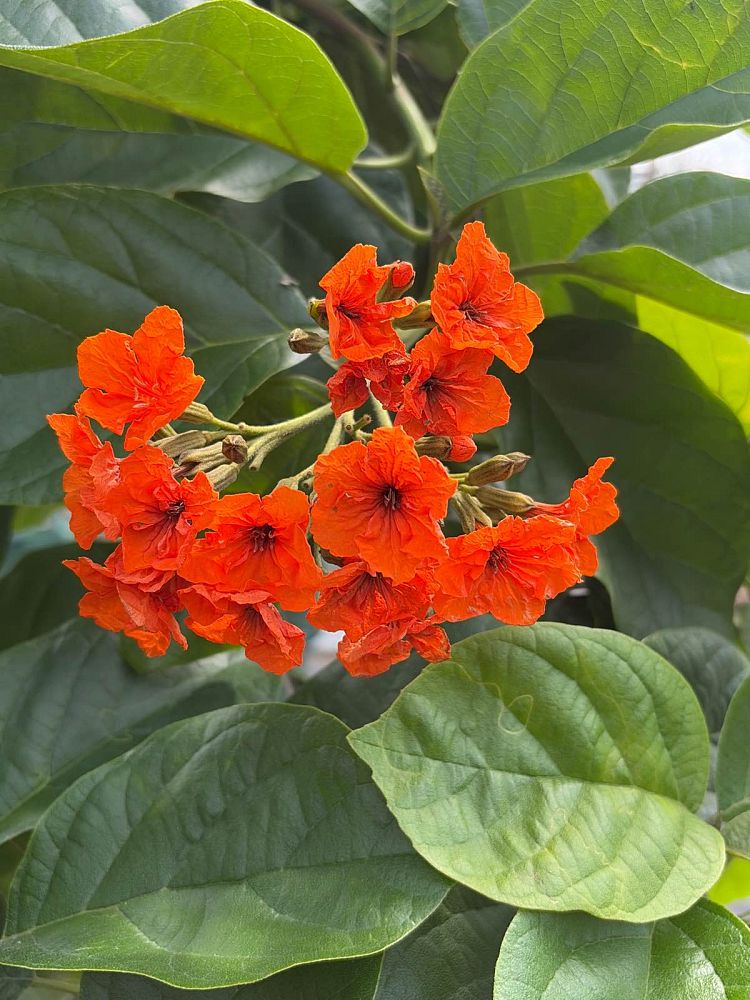
Sage professional observationOrange Geiger is one of the best small flowering trees for a warm coastal composition. We give it a simple green backdrop and enough open space that the orange flowers read as a focal event rather than competing with several other strong colors.
Reference framework
Standards & sources
Profile guidance is informed by the Florida Department of Agriculture and Consumer Services’ Grades and Standards for Nursery Plants, University of Florida IFAS horticultural guidance and Sage’s regional landscape experience.
Site conditions, product labels and professional diagnosis govern the final recommendation.