Florida nursery standards
Quality & grading
Sage recommends nursery material graded Florida No. 1 or better. The grade describes plant quality—not merely size—and should be verified together with the specified height, spread, clear trunk or container size.
- Specify Florida No. 1 or better stock with a sound central spear, balanced crown and root ball firmly established in the container.
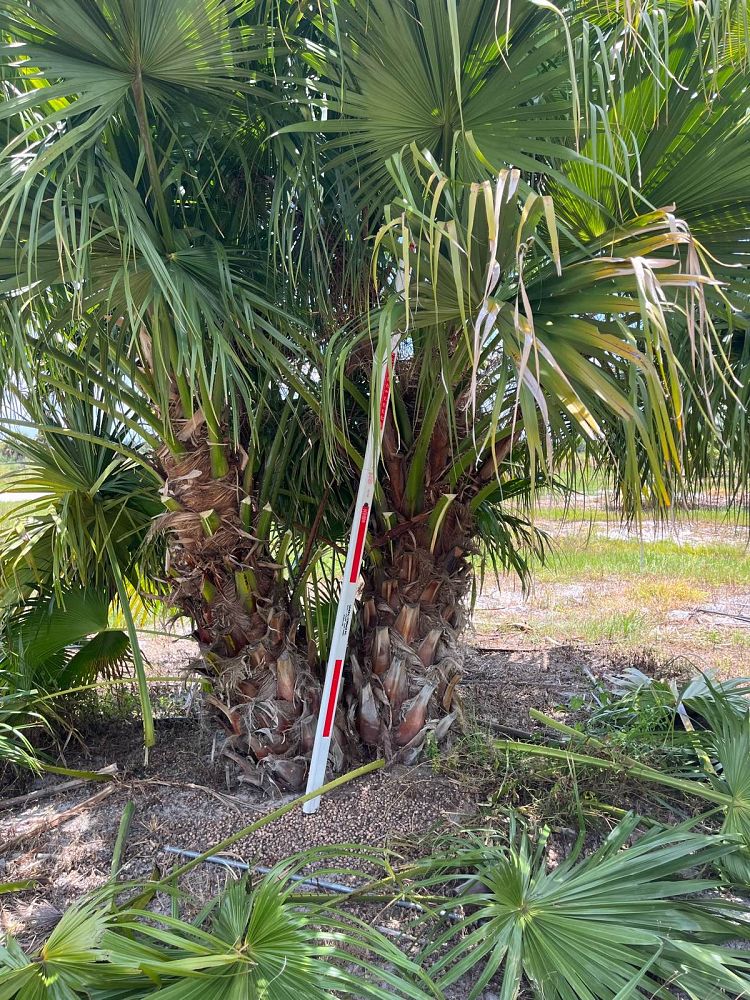
- Confirm a solitary trunk when a clean tree form is required; juvenile palms may remain trunkless for years and are sometimes sold as clustered container groups.
- Reject palms with a loose root ball, buried root-initiation zone, trunk wounds, collapsed spear or pronounced manganese or potassium deficiency.
- Choose the installed size with patience in mind: this species is slow while young and should not be crowded for immediate effect.
Installation guide
Planting for establishment
- Allow approximately eight to ten feet from buildings, screens and pool edges so the mature crown and armed petioles do not conflict with circulation.
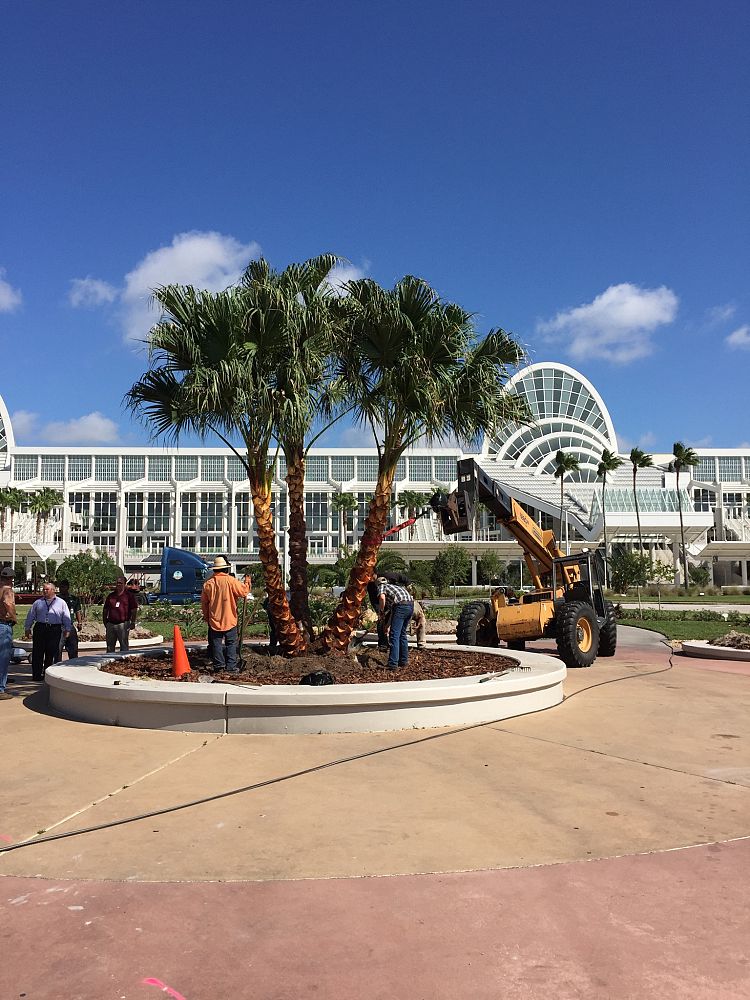
- Install at the original nursery depth and never bury the root-initiation zone or pile mulch against the trunk.
- Use a well-drained site; established palms tolerate brief wet periods, but chronic saturation can weaken roots and increase disease risk.
- Keep the crown clear of overhead utilities and preserve a broad root zone where future trenching is unlikely.
Final planting depth, root-ball preparation, staking and irrigation should respond to the actual root system, soil, drainage and exposure observed on site.
Ongoing care
Water & fertilizer
Irrigation
Water the complete root ball and adjoining soil consistently during establishment, adjusting for rainfall and drainage. Once sustained new growth confirms establishment, lengthen the interval between deep applications. Mature Chinese Fan Palms have moderate drought tolerance but retain a fuller crown with dependable moisture during prolonged dry periods.
Fertilization
Use a controlled-release fertilizer formulated for Florida palms, with appropriate potassium, magnesium, manganese and complete micronutrients, broadcast uniformly across the root zone according to the label. Diagnose whether symptoms occur on older or newest foliage before correcting a suspected deficiency; manganese deficiency can permanently deform emerging leaves if ignored.
Correct technique
Pruning & trimming
- Remove only completely brown, broken or hazardous fronds; preserve healthy leaves at and below the horizontal.
- Do not hurricane-cut or repeatedly remove green lower fronds to create an unnaturally small crown.
- Use care around the toothed petiole margins, especially on juvenile and lower leaves.
- Never injure the terminal bud, use climbing spikes or peel living leaf bases from the trunk.
Monitor before treating
Known pests & problems
Manganese deficiency
New leaves may emerge small, frizzled or necrotic. Confirm the diagnosis and correct soil or nutrition promptly; advanced injury to the growing point can be fatal.
Potassium deficiency
Older leaves develop translucent yellow-orange spotting and leaflet-tip necrosis. Use a complete palm-fertilizer program and retain substantially green deficient leaves.
Ganoderma and lethal bronzing
Rapid canopy decline, premature fruit drop, spear collapse or a conk at the trunk base requires professional diagnosis. Neither disease has a curative treatment once confirmed.
Symptoms often overlap. Confirm the cause before applying pesticides or fertilizer, and always follow the product label.
Landscape application
Design guidance
Recommended uses
Compatible pairings
Important cautions
- The crown is considerably broader than it appears on a juvenile nursery palm; do not use it in a narrow foundation bed.
- Leaf petioles can be armed with teeth and should be kept away from close pedestrian circulation.
- Moderate salt-air tolerance does not make the palm suitable for repeated saltwater flooding or the most exposed beachfront sites.
- Chinese Fan Palm has naturalized in parts of Florida; avoid planting next to sensitive natural areas and remove unwanted seedlings.
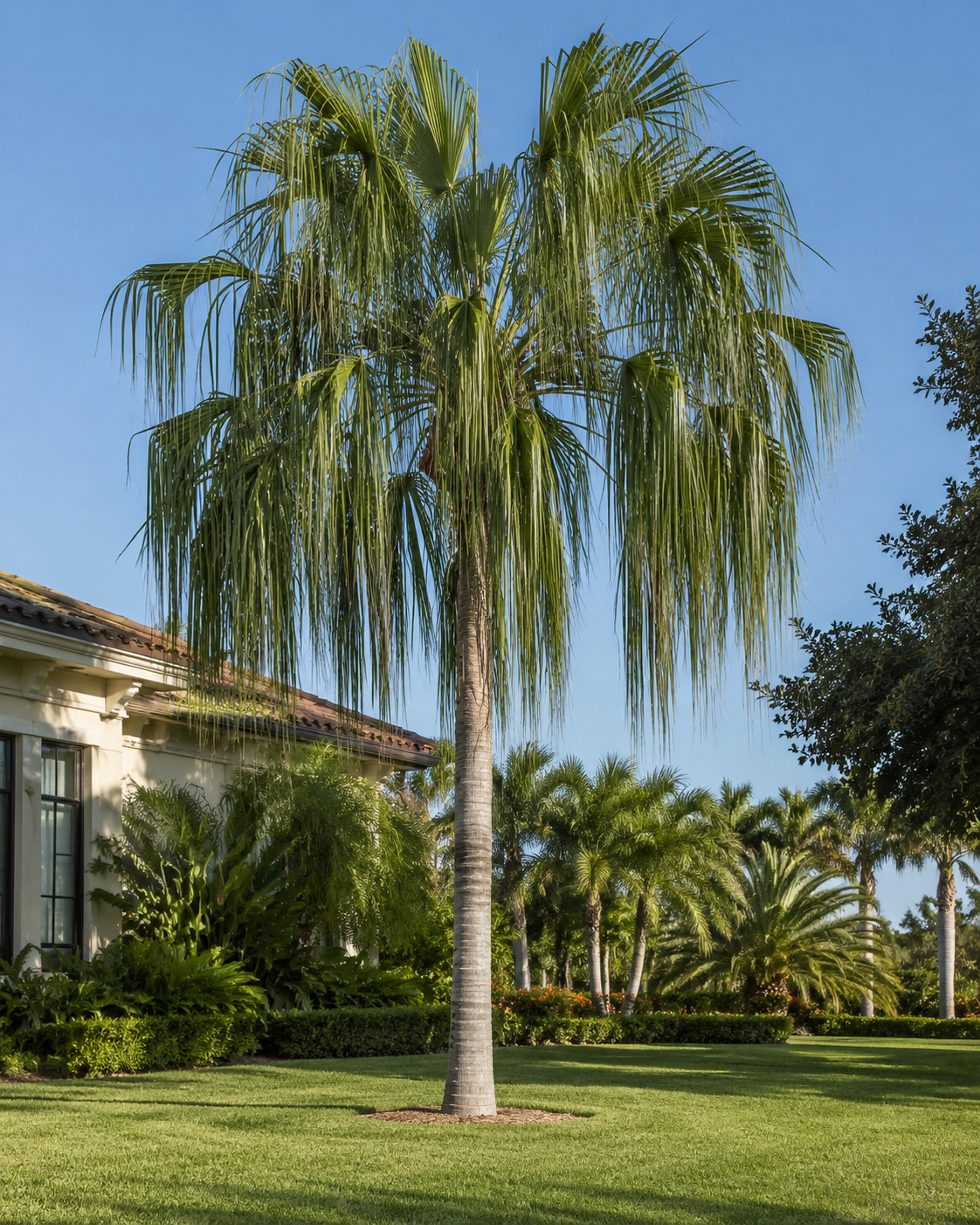
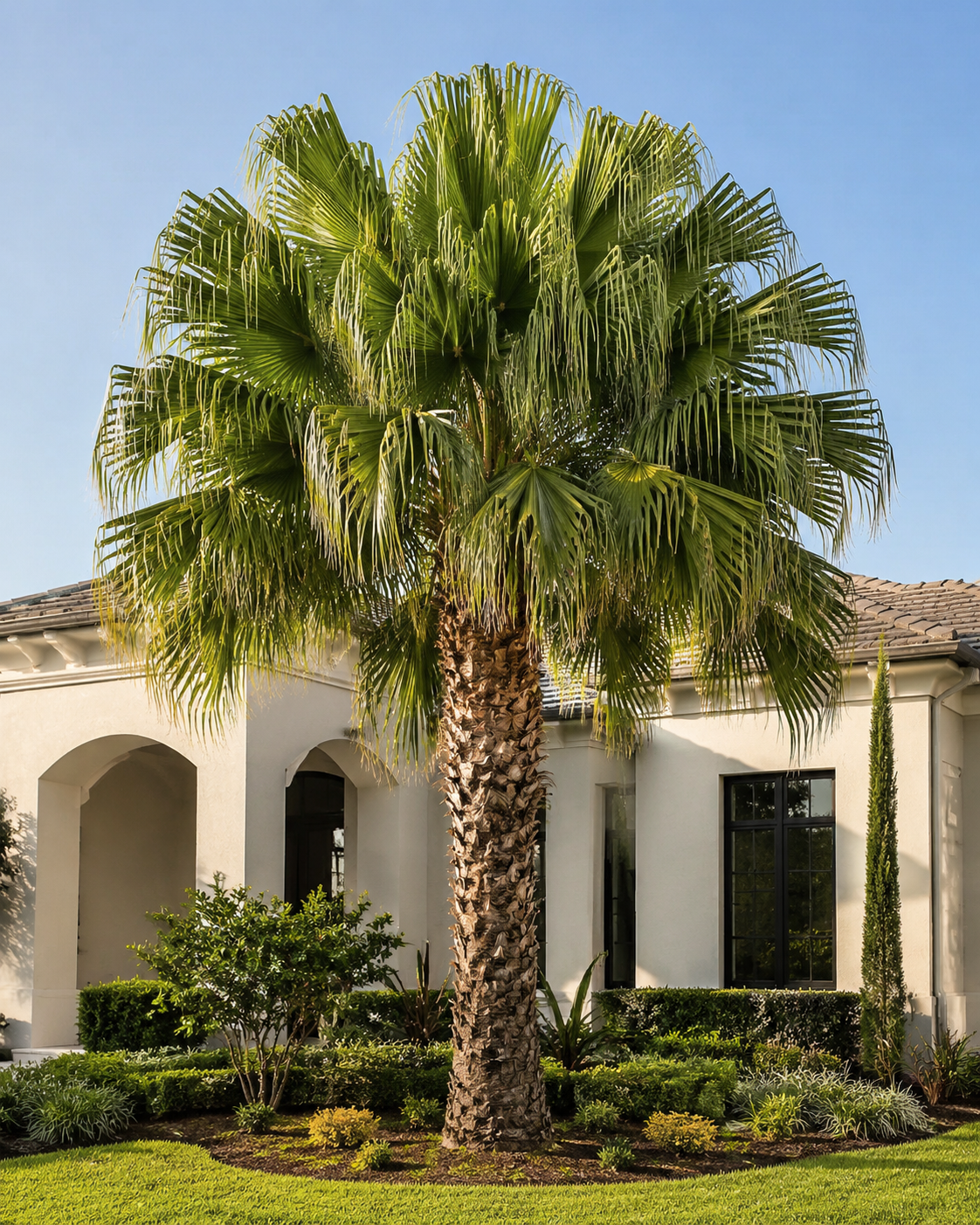
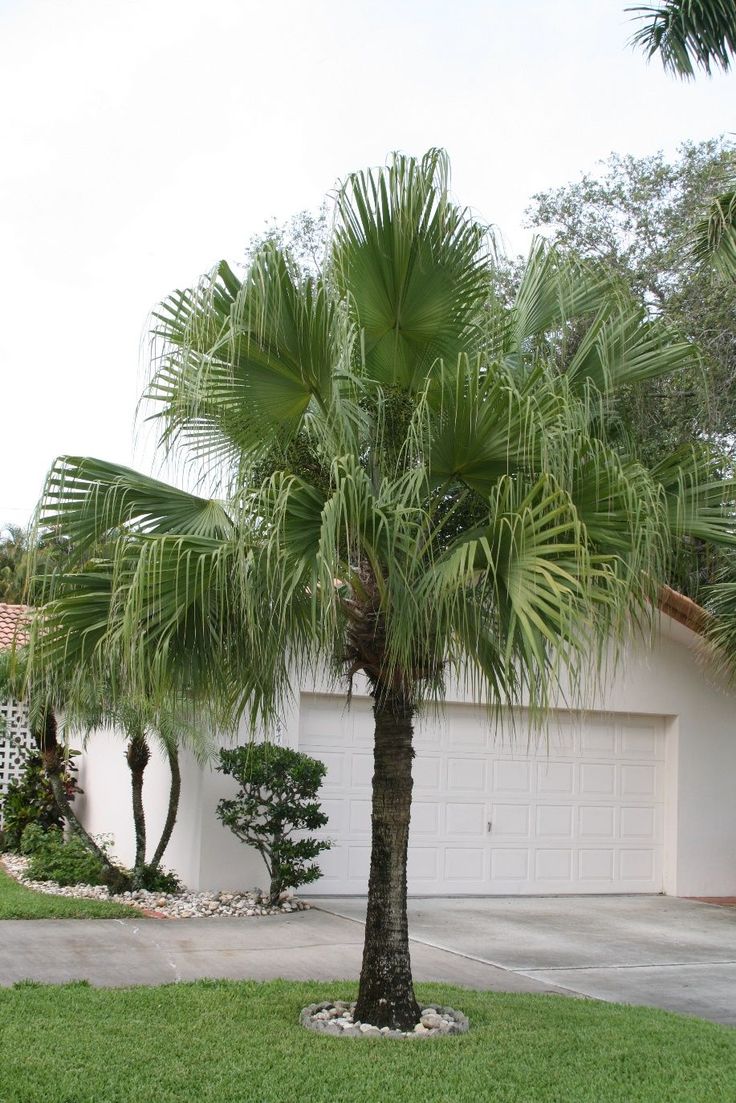
Sage professional observationChinese Fan Palm gives a landscape a calm, established presence. We use its denser fountain-shaped crown as a backdrop or intermediate-scale specimen, with enough clearance that the lower leaves can remain intact instead of being continually cut away.
Reference framework
Standards & sources
Profile guidance is informed by the Florida Department of Agriculture and Consumer Services’ Grades and Standards for Nursery Plants, University of Florida IFAS horticultural guidance and Sage’s regional landscape experience.
Site conditions, product labels and professional diagnosis govern the final recommendation.