Florida nursery standards
Quality & grading
Sage recommends nursery material graded Florida No. 1 or better. The grade describes plant quality—not merely size—and should be verified together with the specified height, spread, clear trunk or container size.
- Specify Florida No. 1 or better material with a straight solitary trunk, healthy spear and evenly distributed crown.
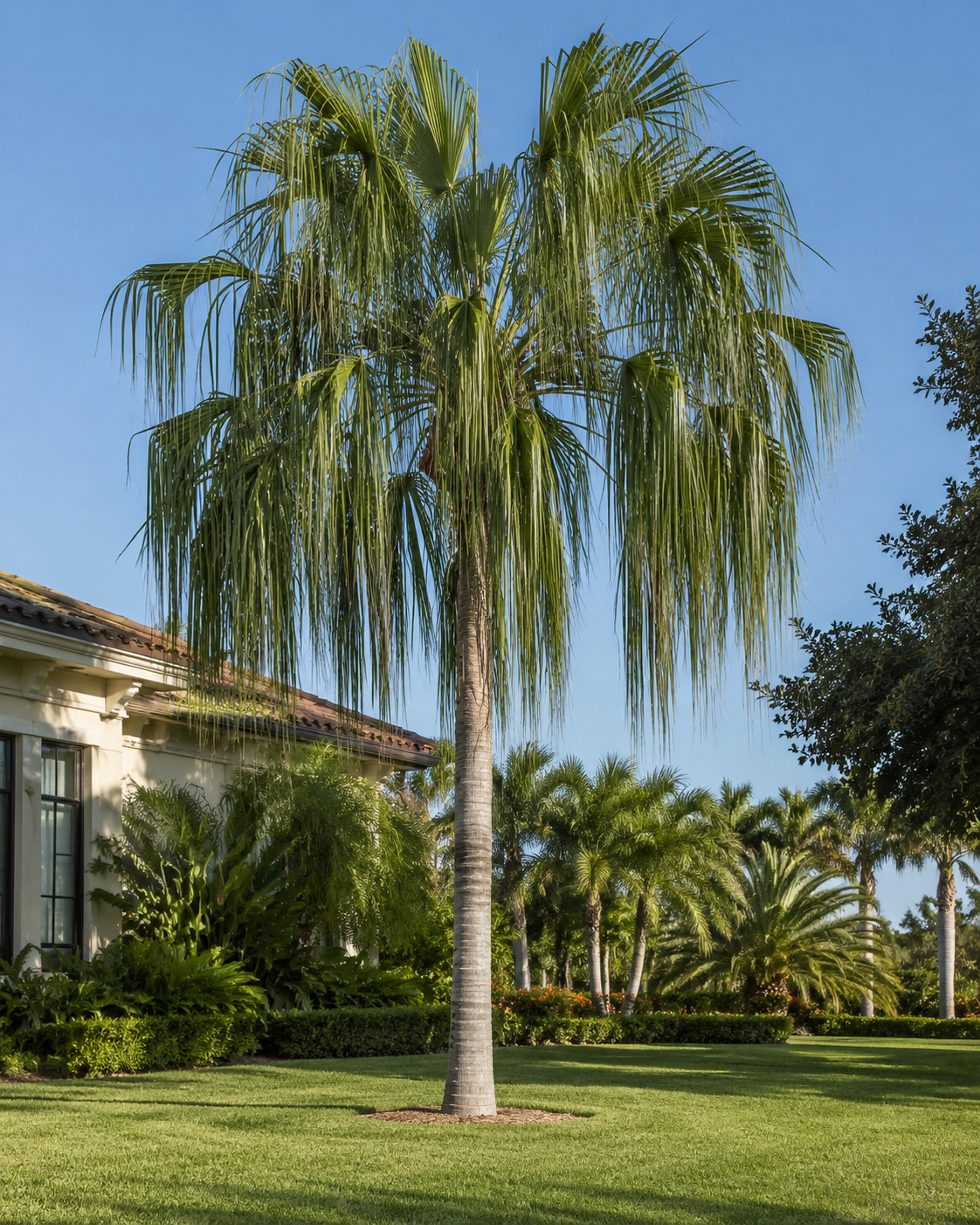
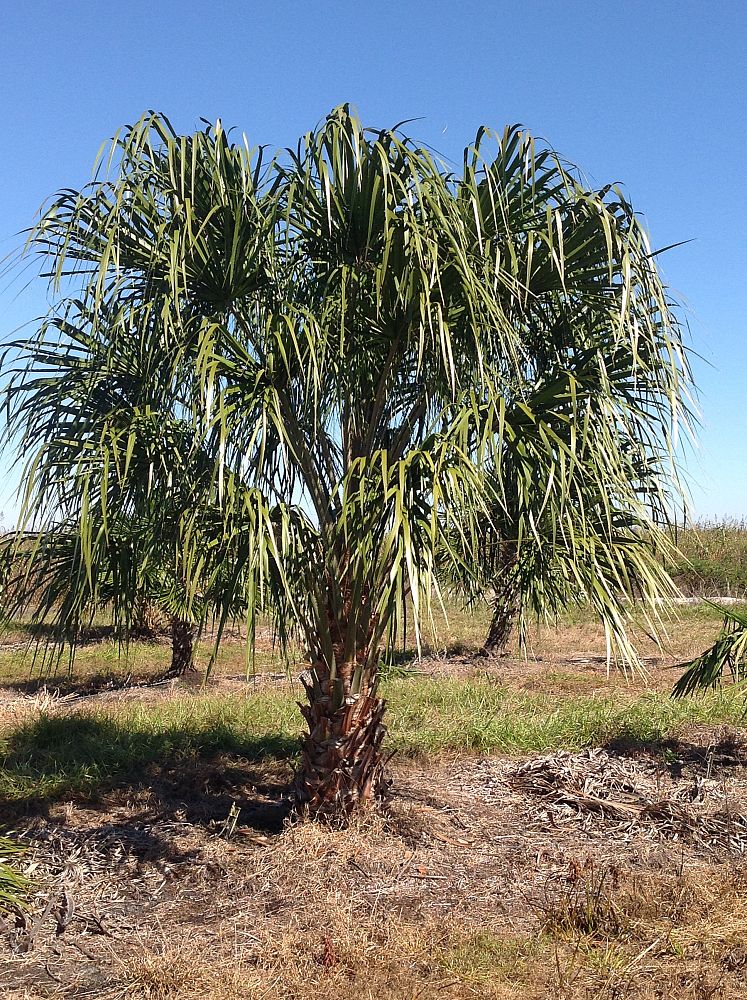
- Confirm the identity by looking for deeply divided leaves with numerous narrow, strongly pendulous ribbonlike segments.
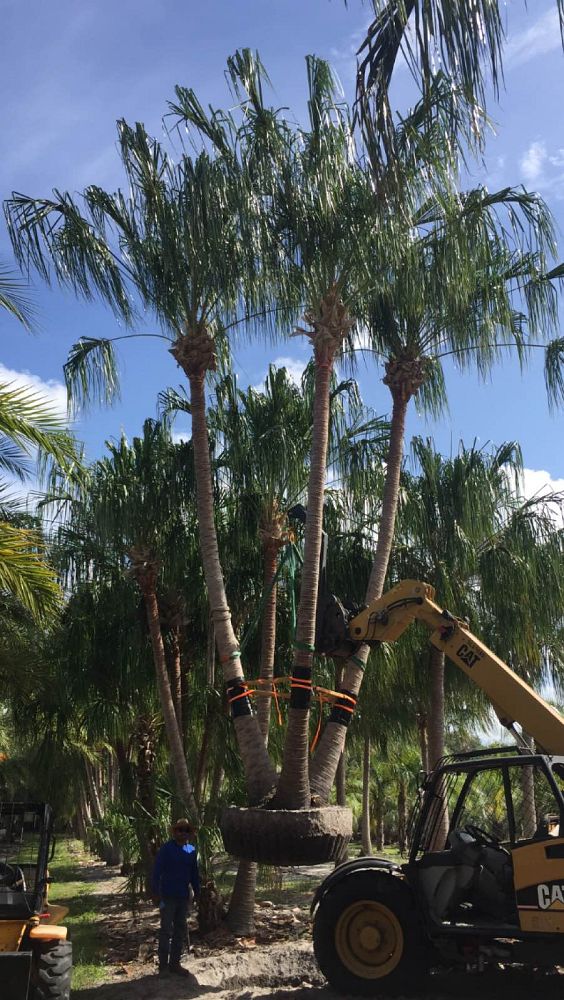
- Inspect container stock for a stable root ball and field-grown palms for professional root preparation and intact handling.
- Reject palms with severe trunk wounds, a shifting root ball, collapsed spear, distorted newest leaves or a chronically thin crown.
Installation guide
Planting for establishment
- Allow approximately eight to ten feet from buildings, pools, screens and walks, and keep the mature canopy outside vehicle and utility conflicts.
- Plant at the original nursery grade without burying the root-initiation zone; preserve the root ball during handling.
- Provide well-drained soil and a broad, unobstructed root area even though the species tolerates occasional wetness after establishment.
- Use as a visible specimen, repeated avenue or high pool backdrop rather than placing it where the flowing leaf segments disappear inside dense canopy.
Final planting depth, root-ball preparation, staking and irrigation should respond to the actual root system, soil, drainage and exposure observed on site.
Ongoing care
Water & fertilizer
Irrigation
Apply deep, consistent establishment irrigation to the root ball and adjacent soil, then taper frequency as roots expand. Established palms tolerate seasonal dry periods but perform best with moderate moisture and good drainage. Avoid shallow daily cycles and prolonged saturation.
Fertilization
Broadcast a controlled-release Florida palm fertilizer containing appropriate potassium, magnesium and complete micronutrients across the root zone according to the label. Do not substitute high-nitrogen turf fertilizer. Retain partially green older leaves while a deficiency program is taking effect.
Correct technique
Pruning & trimming
- Remove only fully brown, broken or hazardous leaves and preserve the naturally flowing green crown.
- Never hurricane-cut; the descending leaf segments are a defining feature, not a defect to be trimmed away.
- Protect the terminal bud and trunk from saw cuts, climbing spikes and aggressive leaf-base stripping.
- Lower large fronds safely and keep workers clear of toothed petiole margins.
Monitor before treating
Known pests & problems
Potassium and magnesium deficiency
Older foliage develops spotting, marginal necrosis or abnormal yellowing. Use a balanced palm program rather than treating one nutrient in isolation.
Manganese deficiency
Frizzled or stunted newest leaves require prompt diagnosis and correction before the terminal bud is permanently damaged.
Palm diseases
Monitor for unexplained spear decline, rapid canopy discoloration or basal conks. Professional diagnosis is necessary because lethal bronzing, bud rots and Ganoderma require different responses.
Symptoms often overlap. Confirm the cause before applying pesticides or fertilizer, and always follow the product label.
Landscape application
Design guidance
Recommended uses
Compatible pairings
Important cautions
- The current accepted name is Livistona decora; Livistona decipiens remains a common nursery-trade synonym.
- Long hanging segments and armed petioles require separation from paths, entries and play areas.
- Do not install under overhead wires or where a 30–50-foot palm will obstruct important views.
- Moderate aerosol salt tolerance does not imply tolerance of repeated seawater inundation.
Sage professional observationRibbon Fan Palm is about movement. We place it against sky, architecture or a restrained dark-green background so the long leaf segments remain legible and animate the composition whenever the breeze rises.
Reference framework
Standards & sources
Profile guidance is informed by the Florida Department of Agriculture and Consumer Services’ Grades and Standards for Nursery Plants, University of Florida IFAS horticultural guidance and Sage’s regional landscape experience.
Site conditions, product labels and professional diagnosis govern the final recommendation.