Florida nursery standards
Quality & grading
Sage recommends nursery material graded Florida No. 1 or better. The grade describes plant quality—not merely size—and should be verified together with the specified height, spread, clear trunk or container size.
- Specify Florida No. 1 or better, desired clear-trunk height and a full, symmetrical crown.
- Confirm the trunk is sound and the root ball is firm, adequately sized and free of severe root damage.
- Reject specimens with trunk cavities, active decay, weak spear leaves or pronounced nutrient deficiency.
Installation guide
Planting for establishment
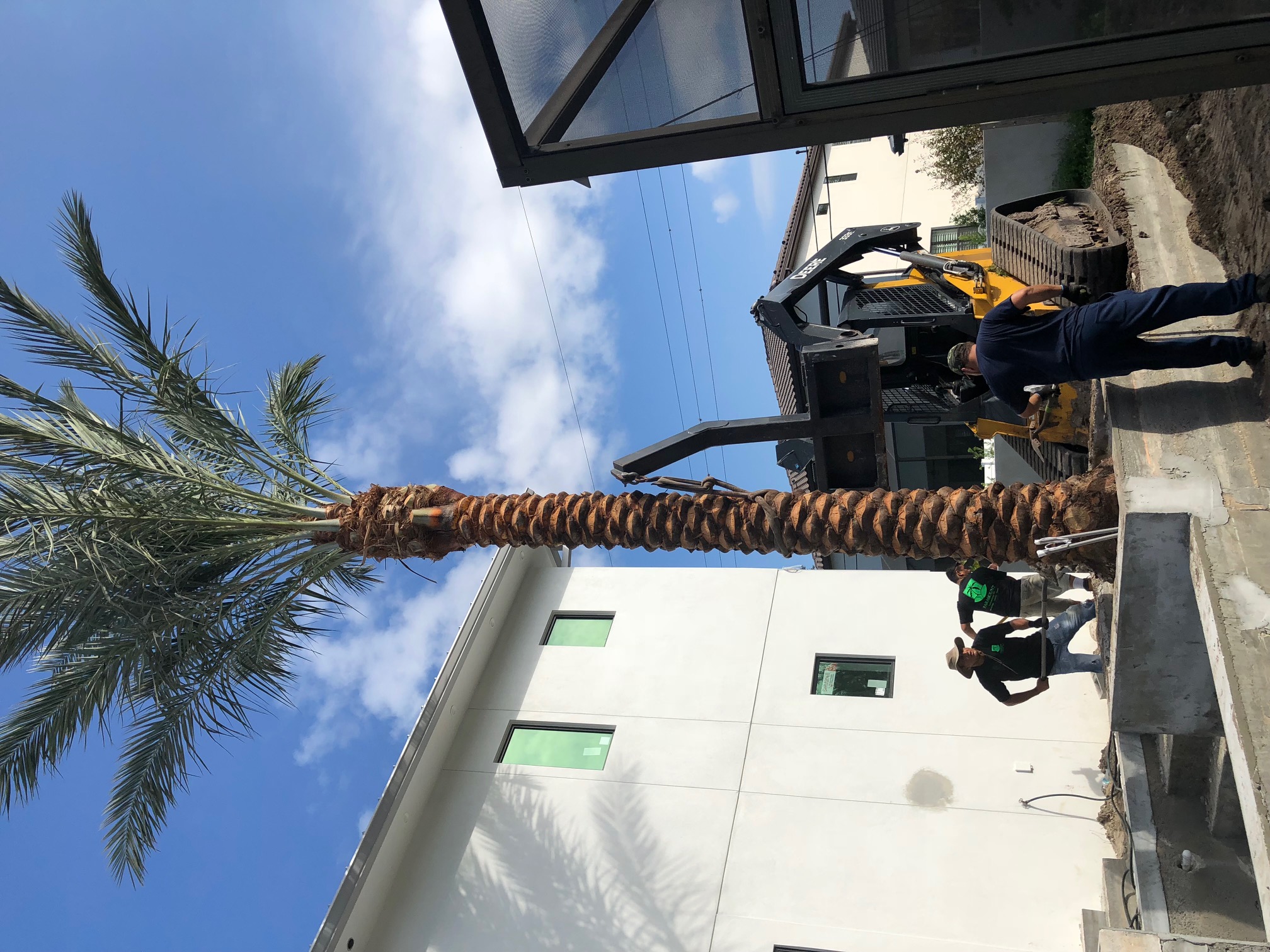
- Install at original nursery depth with the root-initiation zone above finished grade.
- Provide excellent drainage; avoid low areas that hold summer rainfall.
- Brace without puncturing the trunk and remove supports after establishment.
- Allow safe separation from walks, pool decks and entries because leaf-base spines and fruit create maintenance concerns.
Final planting depth, root-ball preparation, staking and irrigation should respond to the actual root system, soil, drainage and exposure observed on site.
Ongoing care
Water & fertilizer
Irrigation
Water deeply through establishment, allowing the upper soil to begin drying between cycles. Mature palms are drought tolerant but look best with periodic deep irrigation during prolonged dry weather.
Fertilization
Broadcast a controlled-release Florida palm fertilizer with potassium, magnesium and micronutrients across the root zone. Avoid high-nitrogen turf fertilizers near palms because they can worsen nutrient imbalance.
Correct technique
Pruning & trimming
- Remove only dead fronds, hazardous fruit stalks and unwanted basal offshoots.
- Preserve green fronds at or above the 9-to-3-o’clock line; never hurricane-cut.
- Use sanitized equipment and avoid trunk wounds, climbing spikes and over-shaving leaf bases.
Monitor before treating
Known pests & problems
Palmetto weevil
A collapsing spear or crown is urgent; recently transplanted and stressed palms are most vulnerable.
Date palm scale
Confirm scale on foliage before treatment and combine control with improved plant vigor.
Fusarium wilt risk
Use sanitized pruning equipment and avoid moving potentially contaminated tools between Phoenix palms.
Symptoms often overlap. Confirm the cause before applying pesticides or fertilizer, and always follow the product label.
Landscape application
Design guidance
Recommended uses
Compatible pairings
Important cautions
- Sharp petiole spines require clearance from people and maintenance routes.
- Falling fruit can stain paving and create litter.
- Poor drainage substantially increases transplant and root-disease risk.
Sage professional observationA Medjool works best as deliberate architecture: at an arrival court, in a balanced group or as a focal point. Too many can make a residence feel commercial; careful placement preserves its impact.
Reference framework
Standards & sources
Profile guidance is informed by the Florida Department of Agriculture and Consumer Services’ Grades and Standards for Nursery Plants, University of Florida IFAS horticultural guidance and Sage’s regional landscape experience.
Site conditions, product labels and professional diagnosis govern the final recommendation.