Florida nursery standards
Quality & grading
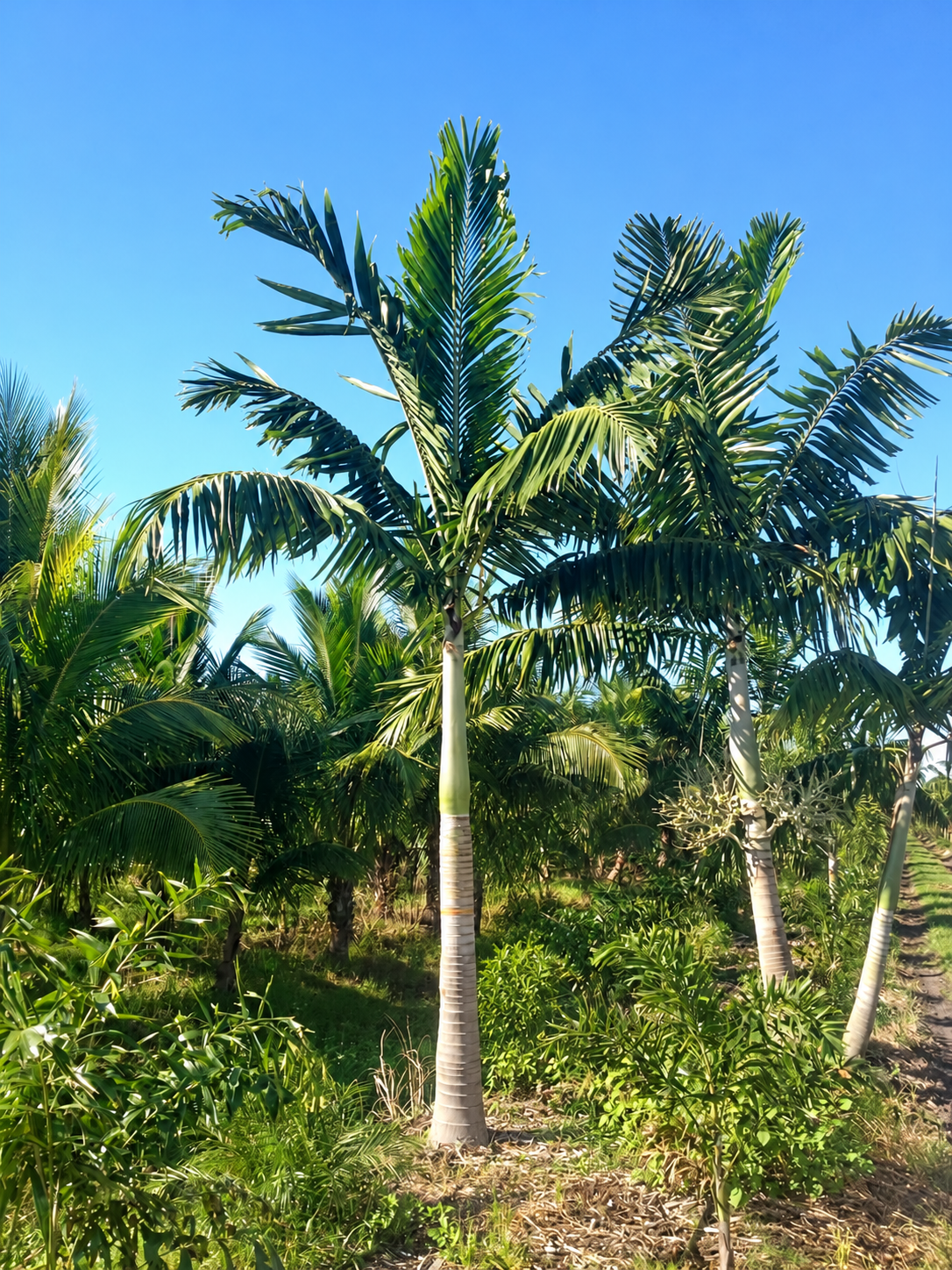
Sage recommends nursery material graded Florida No. 1 or better. The grade describes plant quality—not merely size—and should be verified together with the specified height, spread, clear trunk or container size.
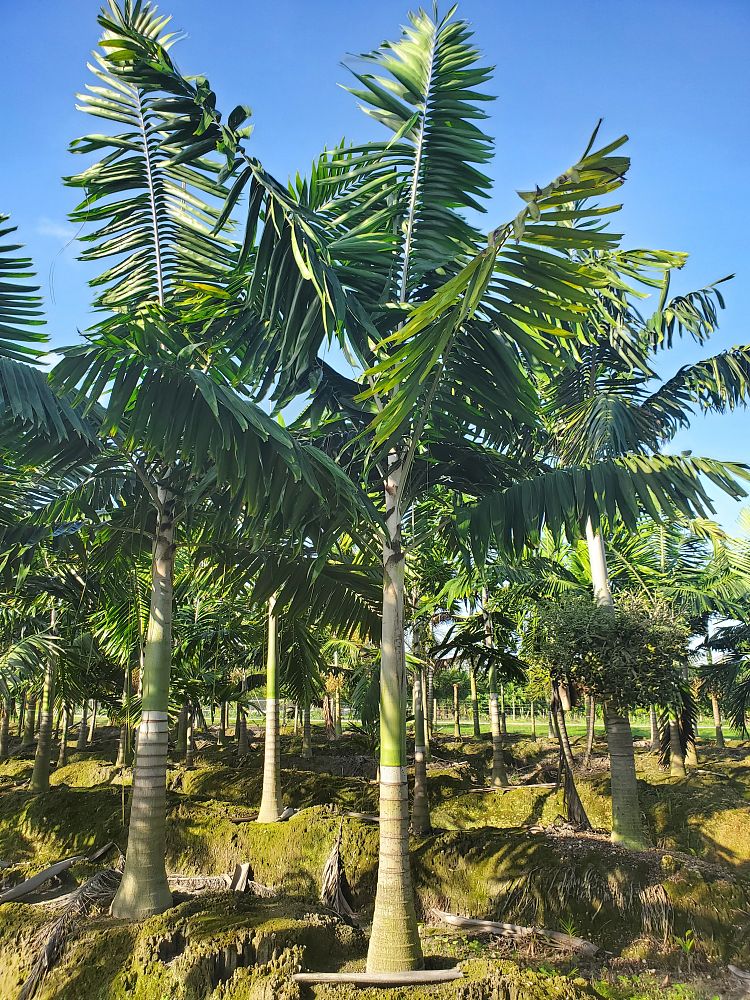
- Specify Florida No. 1 or better material with a straight, undamaged trunk, firm root ball, full crown and an upright healthy spear leaf.
- Inspect the crownshaft and trunk for wounds, constrictions, soft tissue, active scale, abnormal discoloration or evidence of prior over-pruning.
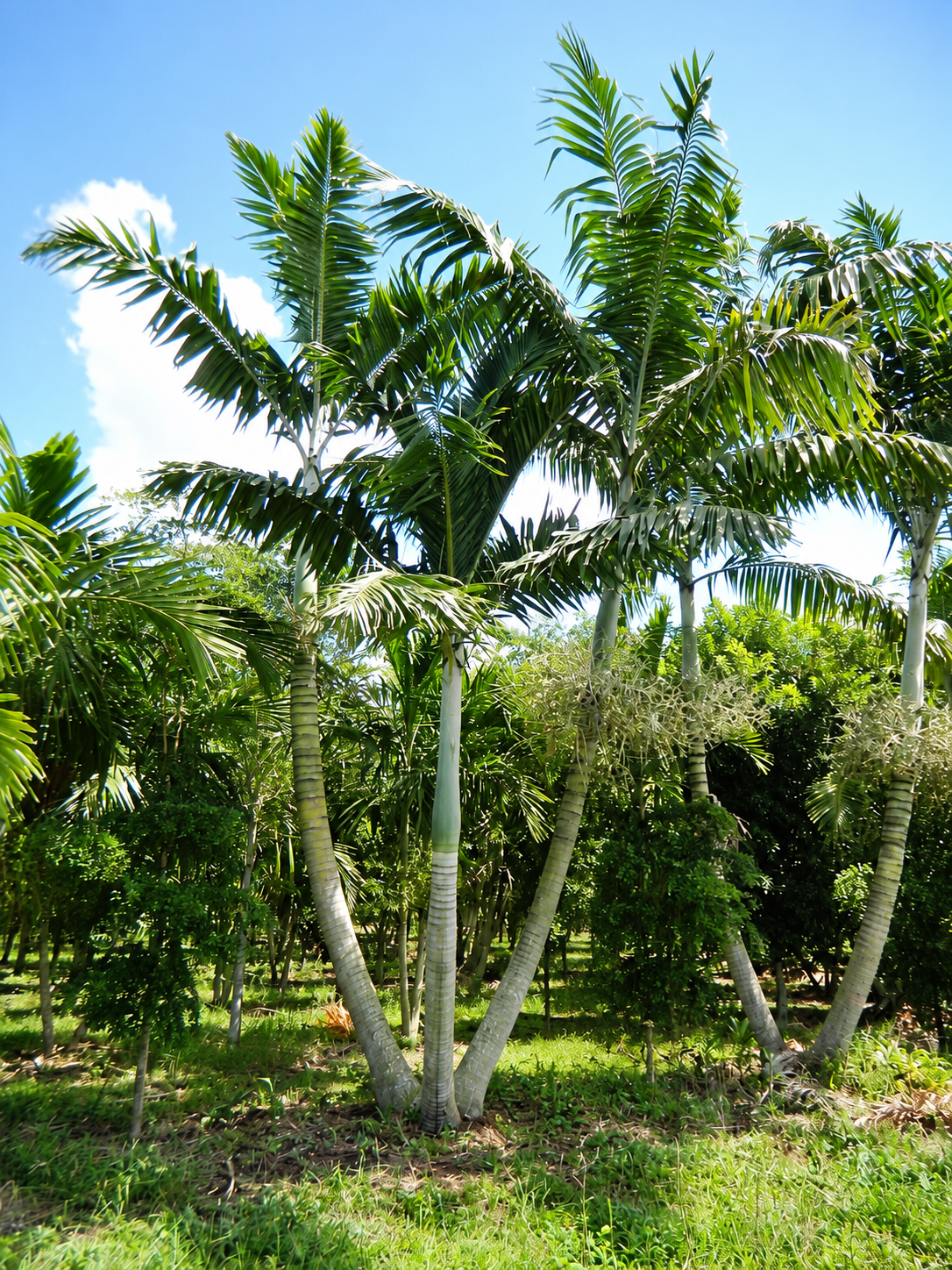
- For grouped installations, select separate palms with complementary clear-trunk heights and crown elevations rather than assuming a clump is one naturally clustering plant.
- Reject severely root-bound containers, unstable root balls, palms planted too deeply in the container or specimens showing progressive crown decline.
Installation guide
Planting for establishment
- Install at the same depth the palm grew in the nursery and keep the root-initiation zone at or slightly above finished grade.
- Use a well-drained site and redirect roof runoff or irrigation that would keep the root zone continuously saturated.
- Allow approximately eight to ten feet from buildings and screen enclosures, six to eight feet from pools and decks, and adequate overhead clearance for a mature crown.
- Brace only when required, without nails or trunk punctures, and remove temporary supports after the root system is stable.
- Use a protected southern or coastal microclimate near the northern edge of its range and avoid exposed frost pockets.
Final planting depth, root-ball preparation, staking and irrigation should respond to the actual root system, soil, drainage and exposure observed on site.
Ongoing care
Water & fertilizer
Irrigation
Water the entire root ball and adjacent soil consistently through establishment, then increase the interval between deep applications as roots expand. Established Montgomery Palms prefer moderate, even moisture but must drain between irrigation cycles. Do not rely on shallow daily watering; correct persistent grade, soil or runoff problems.
Fertilization
Use a controlled-release fertilizer formulated for Florida palms, with appropriate potassium, magnesium and complete micronutrients, broadcast uniformly across the root zone according to the label and local fertilizer rules. Do not substitute high-nitrogen turf fertilizer. Diagnose whether symptoms occur first on old or new leaves before attempting to correct potassium, magnesium, manganese, iron or boron deficiencies.
Correct technique
Pruning & trimming
- Remove only completely brown, broken or hazardous fronds and spent flower or fruit stalks when litter is a concern.
- Preserve healthy green fronds and the naturally full crown; never hurricane-cut or remove foliage above the horizontal nine-and-three position for appearance.
- Do not cut, puncture or climb the trunk with spikes, and protect the single terminal growing point and crownshaft from tools and impact.
- Sanitize pruning tools between palms and avoid unnecessary pruning during periods of severe stress.
Monitor before treating
Known pests & problems
Scale insects and sooty mold
Inspect leaflets, rachises and protected crown tissue for attached scales, honeydew, ants and black sooty growth. Confirm live insects before treating; improve plant vigor, preserve beneficial insects and use a labeled horticultural oil only where the ornamental-palm label permits it.
Leaf spots and blights
Spots may be cosmetic or associated with prolonged leaf wetness, poor airflow or stress. Avoid late overhead irrigation, improve spacing and submit a sample when spotting advances into new foliage; fungicide should follow diagnosis and the current palm label.
Nutrient deficiency
Yellowing, translucent spotting, frizzled new growth or a narrowing crown can reflect different deficiencies. Correct the complete palm-nutrition program rather than removing symptomatic green leaves or applying one nutrient without diagnosis.
Root, crown or trunk decline
Deep planting, saturated soil, establishment drought and trunk wounds can produce decline that resembles infection. A loose spear, soft crownshaft, conk, rapid canopy collapse or unstable trunk requires prompt professional evaluation.
Symptoms often overlap. Confirm the cause before applying pesticides or fertilizer, and always follow the product label.
Landscape application
Design guidance
Recommended uses
Compatible pairings
Important cautions
- Cold injury can be serious in exposed Zone 10a sites; favor Zones 10b–11 or a protected warm microclimate.
- The mature height and crown spread require clearance from roofs, utilities, narrow side yards and pool screens.
- Moderate salt tolerance does not make the root system suitable for repeated seawater inundation.
- Falling fruit can create litter on paving and pool decks; remove fruit stalks only when site use justifies it.
- Multi-trunk effects are normally created by planting multiple individual palms; provide sufficient root and crown space for each.
Sage professional observationMontgomery Palm gives a design the clean trunk and crownshaft elegance people associate with larger tropical palms, but with a lighter silhouette. We use it as a single vertical accent or in carefully composed groups where varied trunk heights create depth without crowding architecture.
Reference framework
Standards & sources
Profile guidance is informed by the Florida Department of Agriculture and Consumer Services’ Grades and Standards for Nursery Plants, University of Florida IFAS horticultural guidance and Sage’s regional landscape experience.
Site conditions, product labels and professional diagnosis govern the final recommendation.