Florida nursery standards
Quality & grading
Sage recommends nursery material graded Florida No. 1 or better. The grade describes plant quality—not merely size—and should be verified together with the specified height, spread, clear trunk or container size.
- Specify Florida No. 1 or better with a dense, symmetrical crown and healthy central growth.
- Choose plants with firm bulbs or crowns and roots that fill—but do not severely circle—the container.
- Reject plants with soft basal tissue, extensive leaf spotting, active scale or obvious crown damage.
Installation guide
Planting for establishment
- Place the crown at the nursery-grown depth in fertile, freely draining soil.
- Allow four to six feet of spread so foliage does not obstruct walks or pool circulation.
- Mulch lightly while keeping material away from the crown.
- Site where cold air does not settle and wind will not continually shred foliage.
Final planting depth, root-ball preparation, staking and irrigation should respond to the actual root system, soil, drainage and exposure observed on site.
Ongoing care
Water & fertilizer
Irrigation
Provide regular moisture during establishment and flowering periods, but avoid waterlogged soil around the bulb and crown. Established plants tolerate short dry periods.
Fertilization
Apply a balanced slow-release landscape fertilizer with micronutrients during active growth when needed. Avoid piling granular fertilizer into the crown.
Correct technique
Pruning & trimming
- Remove yellow, torn or collapsed leaves cleanly near the base without cutting healthy central growth.
- Remove spent flower stalks after flowering unless seed production is desired.
- Avoid shaping the plant by cutting leaf tips; remove an entire damaged leaf instead.
Monitor before treating
Known pests & problems
Crinum lily caterpillar
Chewed foliage and dark caterpillars can escalate quickly; inspect leaf folds and treat while larvae are young.
Scale insects
Check leaf bases and undersides, especially on stressed plants.
Leaf spots and basal rot
Improve drainage and airflow; avoid wetting foliage late in the day and diagnose soft crowns promptly.
Symptoms often overlap. Confirm the cause before applying pesticides or fertilizer, and always follow the product label.
Landscape application
Design guidance
Recommended uses
Compatible pairings
Important cautions
- The plant contains compounds that can be toxic if ingested.
- Large leaves need substantial clearance from paths.
- Cold damage is likely in exposed locations near the edge of its range.
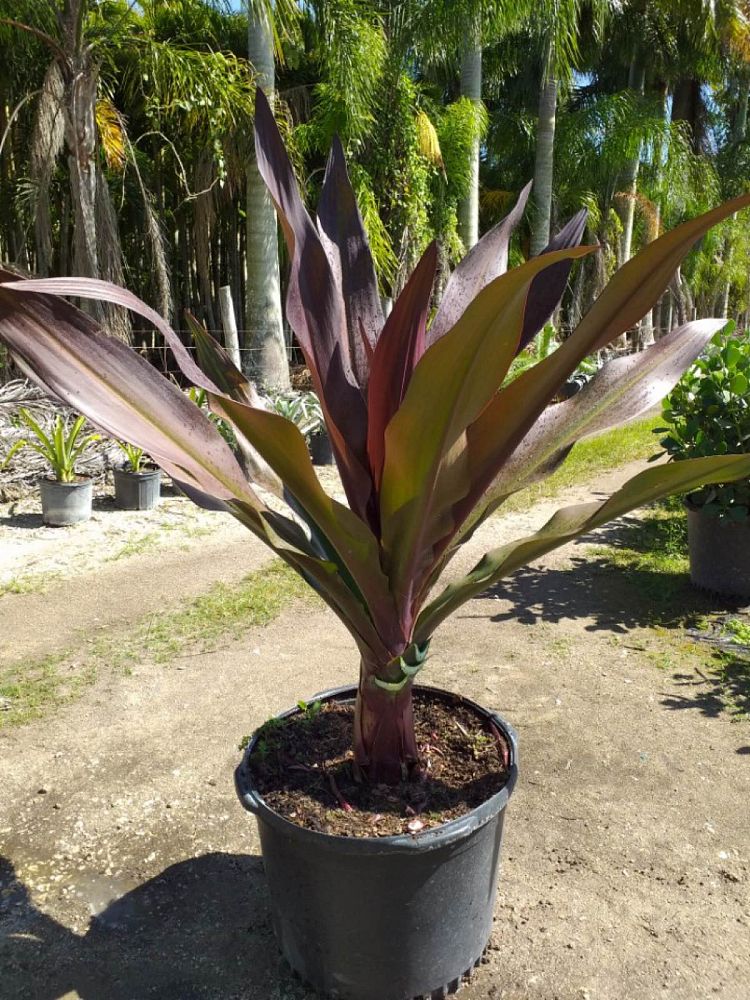
Sage professional observationQueen Emma earns its space. We use it where the foliage can read as a bold block of color—often against deep green hedging or pale stone—without being clipped into submission.
Reference framework
Standards & sources
Profile guidance is informed by the Florida Department of Agriculture and Consumer Services’ Grades and Standards for Nursery Plants, University of Florida IFAS horticultural guidance and Sage’s regional landscape experience.
Site conditions, product labels and professional diagnosis govern the final recommendation.