Florida nursery standards
Quality & grading
Sage recommends nursery material graded Florida No. 1 or better. The grade describes plant quality—not merely size—and should be verified together with the specified height, spread, clear trunk or container size.
- Specify Florida No. 1 or better with upright, vigorous growth and an appropriately full canopy.
- Choose firmly rooted specimens with intact central leaves and no soft basal tissue.
- Reject plants with severe root binding, active scale, extensive leaf spotting or broken central growth.
Installation guide
Planting for establishment
- Allow at least ten feet of functional width and adequate overhead room.
- Set at nursery depth in amended, freely draining soil; do not bury the crown.
- Correct circling container roots before backfilling.
- Use a protected location when intact foliage is important to the design.
Final planting depth, root-ball preparation, staking and irrigation should respond to the actual root system, soil, drainage and exposure observed on site.
Ongoing care
Water & fertilizer
Irrigation
Maintain consistent moisture during establishment and active growth, allowing drainage between cycles. Reduce irrigation in cool weather and avoid chronically saturated crowns.
Fertilization
Use a balanced slow-release landscape fertilizer with micronutrients during warm active growth, following label rates. Excess feeding can create soft growth and unnecessary size.
Correct technique
Pruning & trimming
- Remove entire damaged leaves and stalks close to the base with clean tools.
- Thin unwanted basal shoots selectively to manage width while retaining a natural layered form.
- Do not cut leaves halfway across the blade to fit a confined space.
Monitor before treating
Known pests & problems
Scale and mealybugs
Inspect leaf bases, undersides and sheltered interior stems; ant activity can be an early clue.
Spider mites
Fine stippling and webbing are more common in hot, dry or protected sites; confirm before treatment.
Root or crown rot
Softening and collapse usually point to drainage or irrigation problems that must be corrected.
Symptoms often overlap. Confirm the cause before applying pesticides or fertilizer, and always follow the product label.
Landscape application
Design guidance
Recommended uses
Compatible pairings
Important cautions
- Wind routinely splits the large leaves.
- Mature clumps can overwhelm small beds and block windows.
- Roots and shoots require space away from walls and confined planters.
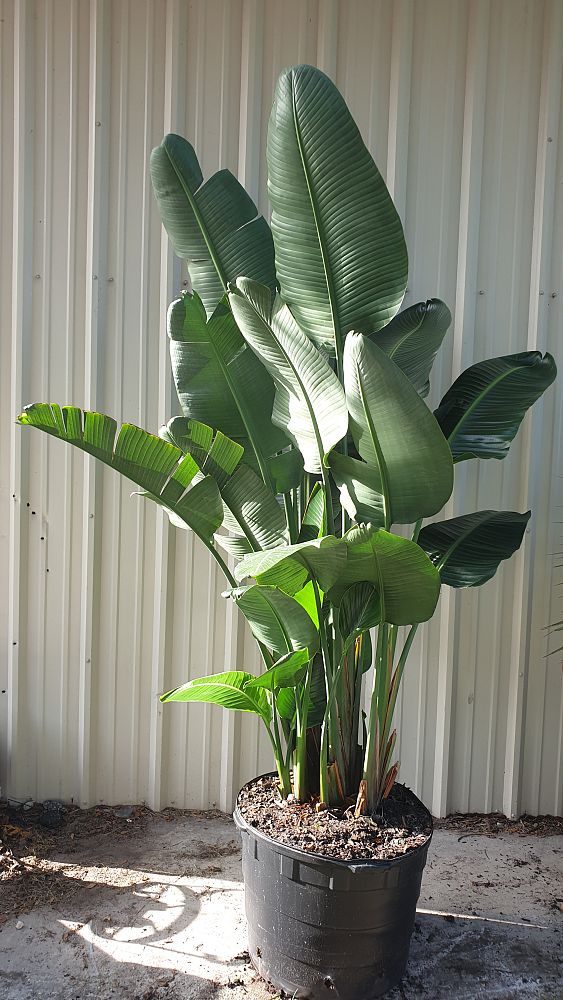
Sage professional observationWhite bird is strongest when its future scale is treated honestly. In the right protected setting, a mature clump gives a residence an immediate resort character.
Reference framework
Standards & sources
Profile guidance is informed by the Florida Department of Agriculture and Consumer Services’ Grades and Standards for Nursery Plants, University of Florida IFAS horticultural guidance and Sage’s regional landscape experience.
Site conditions, product labels and professional diagnosis govern the final recommendation.