Florida nursery standards
Quality & grading
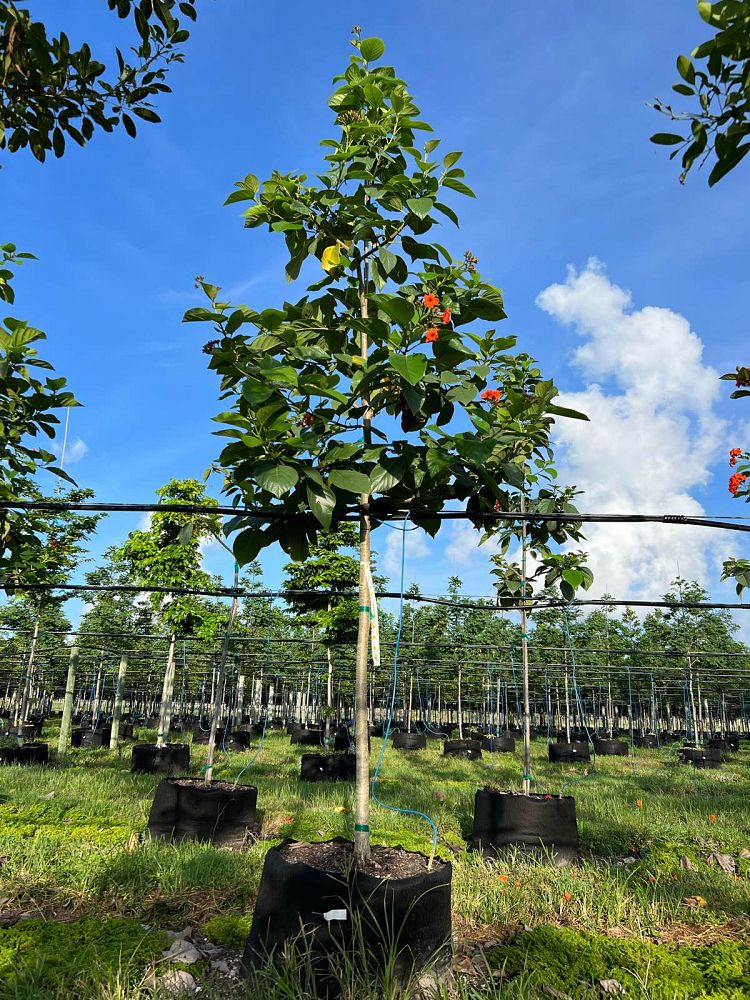
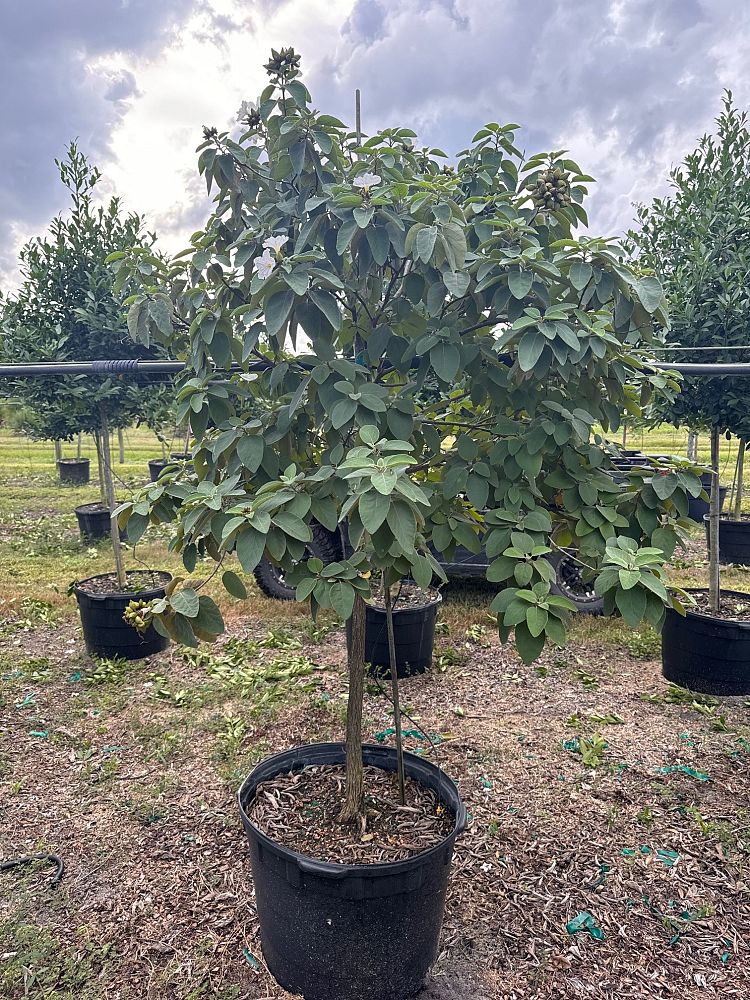
Sage recommends nursery material graded Florida No. 1 or better. The grade describes plant quality—not merely size—and should be verified together with the specified height, spread, clear trunk or container size.
- Specify Florida No. 1 or better stock with balanced single- or multi-trunk structure and a root ball firmly established in the container.
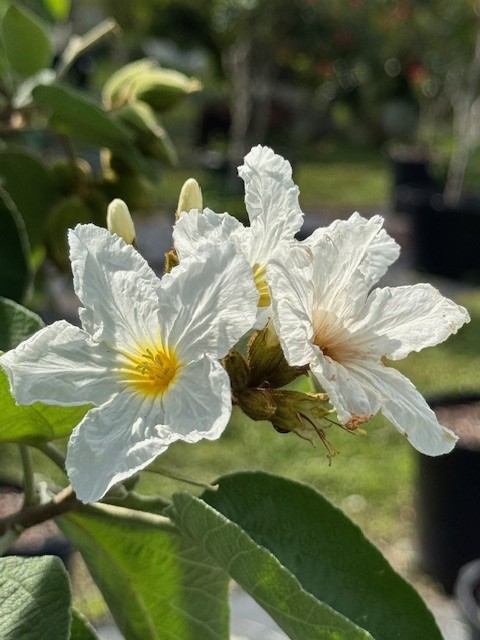
- Confirm the species by its gray-green, softly textured leaves and white trumpet flowers with yellow throats.
- Choose a form that matches the use: low multi-trunk specimen, patio tree or a standard with sufficient clearance.
- Reject trees with severe circling roots, buried root flare, included bark, trunk wounds or sparse foliage caused by chronic nursery stress.
Installation guide
Planting for establishment
- Plant in full sun to partial shade on well-drained soil; flowering and crown density are generally strongest with abundant sun.
- Allow approximately six to eight feet from buildings and pools and four to six feet from walks, responding to the selected trunk form.
- Set the first major roots at or slightly above finished grade and keep mulch several inches away from the trunk.
- Use where heat, alkaline soil and periodic drought challenge less adapted small flowering trees.
Final planting depth, root-ball preparation, staking and irrigation should respond to the actual root system, soil, drainage and exposure observed on site.
Ongoing care
Water & fertilizer
Irrigation
Provide regular deep irrigation through establishment, allowing the soil to drain between applications. Once established, White Geiger is highly drought tolerant. Supplemental water during extended dry periods can sustain flowering, but constant wetness is unnecessary and potentially harmful.
Fertilization
White Geiger generally has modest nutritional needs. If growth, leaf color or a soil test indicates need, use a slow-release landscape fertilizer with micronutrients at the labeled rate. Avoid excess nitrogen and comply with seasonal county fertilizer restrictions.
Correct technique
Pruning & trimming
- Select and space permanent trunks and branches while the tree is young; multiple stems can become crowded without early guidance.
- Use reduction cuts to maintain clearance and remove crossing, dead or weakly attached branches.
- Avoid topping or routinely shearing the rounded crown.
- After frost injury, wait until the extent of living tissue is clear before removing damaged wood.
Monitor before treating
Known pests & problems
Generally low pest pressure
UF/IFAS reports no major pest or disease concerns. Investigate irrigation, root depth and drainage before assuming an insect problem.
Scale insects
Occasional scale may produce honeydew or reduced vigor. Confirm the species and level of damage before treatment.
Cold and moisture stress
Severe frost may cause leaf drop, while chronically wet soil can thin the crown. Match the response to the environmental cause.
Symptoms often overlap. Confirm the cause before applying pesticides or fertilizer, and always follow the product label.
Landscape application
Design guidance
Recommended uses
Compatible pairings
Important cautions
- White Geiger is Cordia boissieri, also called Texas Olive; it is not a white-flowered form of Cordia sebestena.
- Fleshy fruit attracts birds but should not be consumed in quantity and may create light seasonal litter.
- Although more cold hardy than Orange Geiger, severe frost can cause temporary leaf loss.
- Moderate salt-air tolerance is useful near the Gulf but is lower than Orange Geiger's tolerance of exposed coastal spray.
Sage professional observationWhite Geiger is the quieter, more adaptable member of this comparison. Its soft gray-green foliage and white-and-yellow flowers fit refined small spaces, while its drought and cold tolerance give us more placement options inland.
Reference framework
Standards & sources
Profile guidance is informed by the Florida Department of Agriculture and Consumer Services’ Grades and Standards for Nursery Plants, University of Florida IFAS horticultural guidance and Sage’s regional landscape experience.
Site conditions, product labels and professional diagnosis govern the final recommendation.